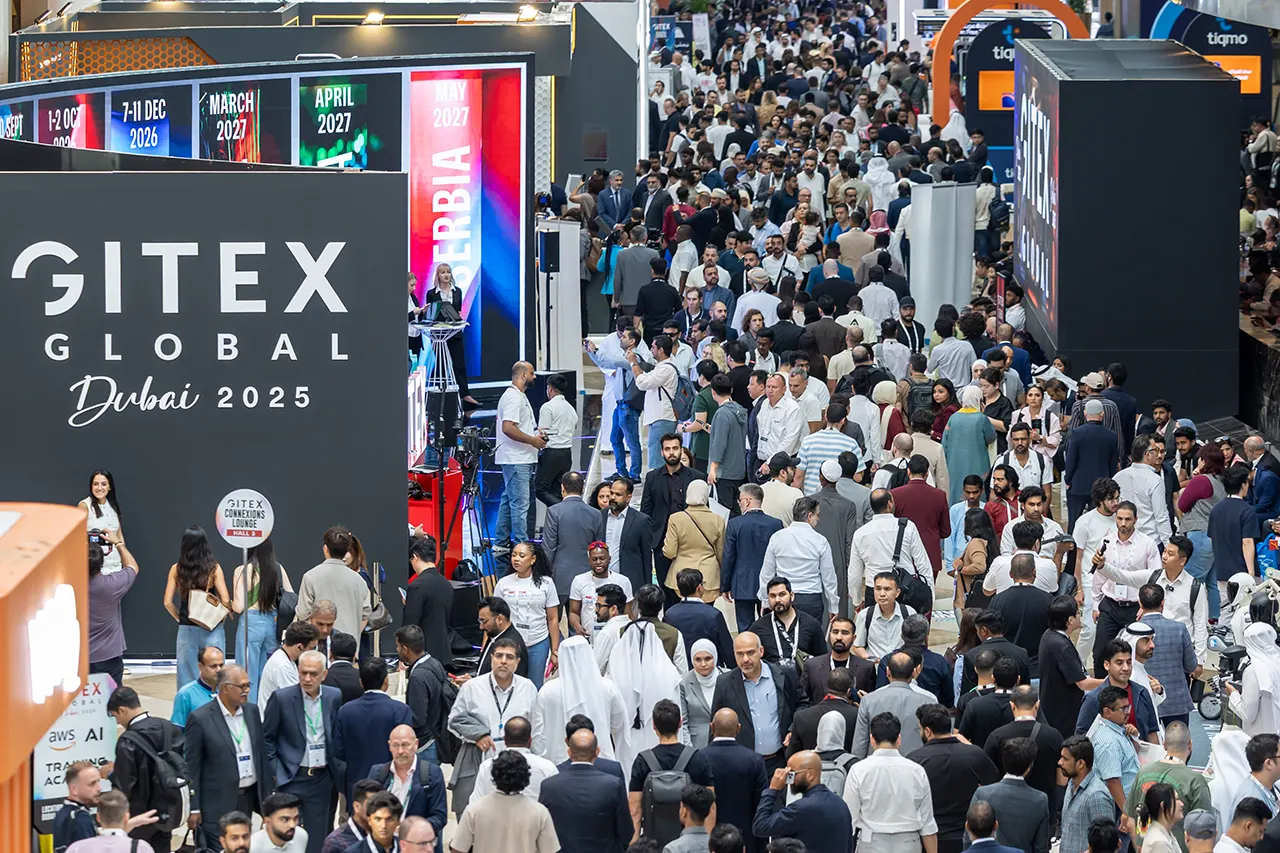
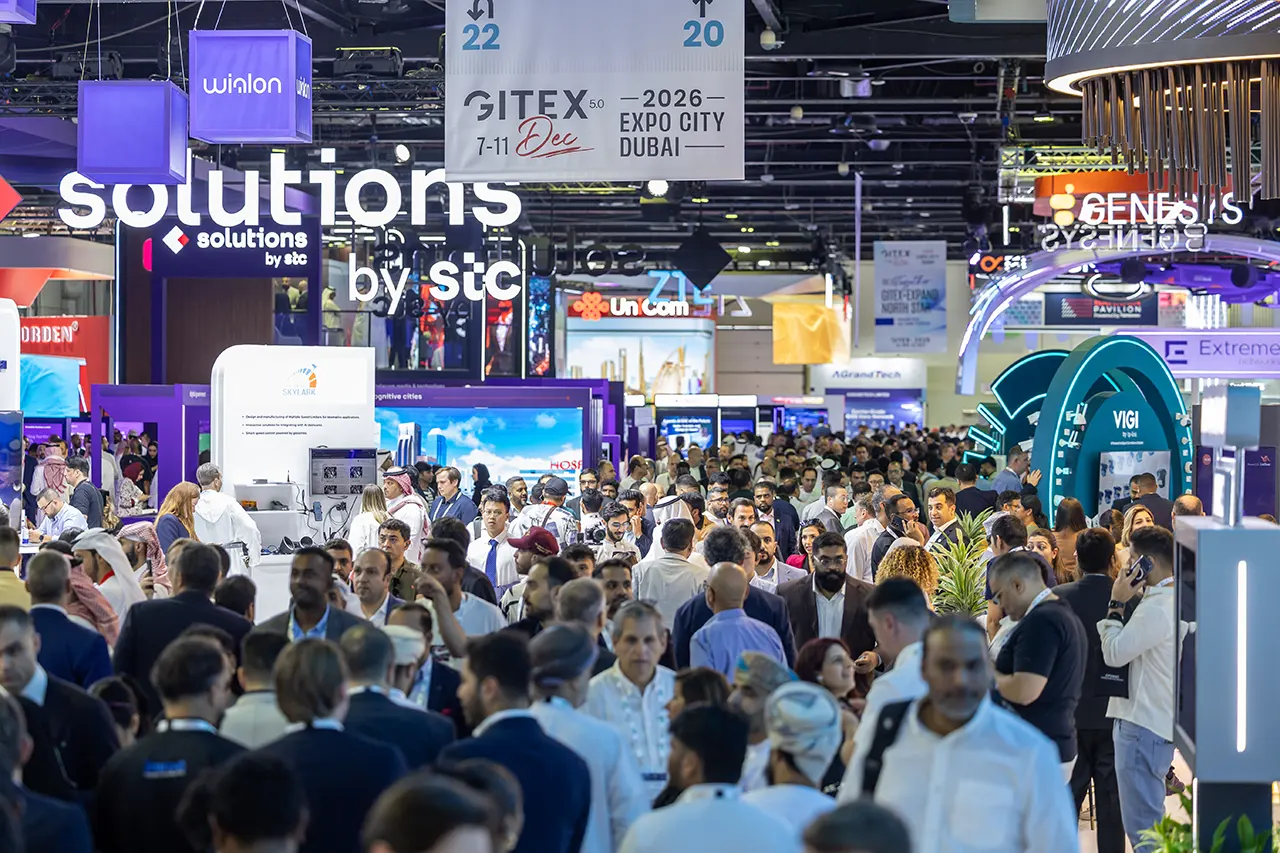
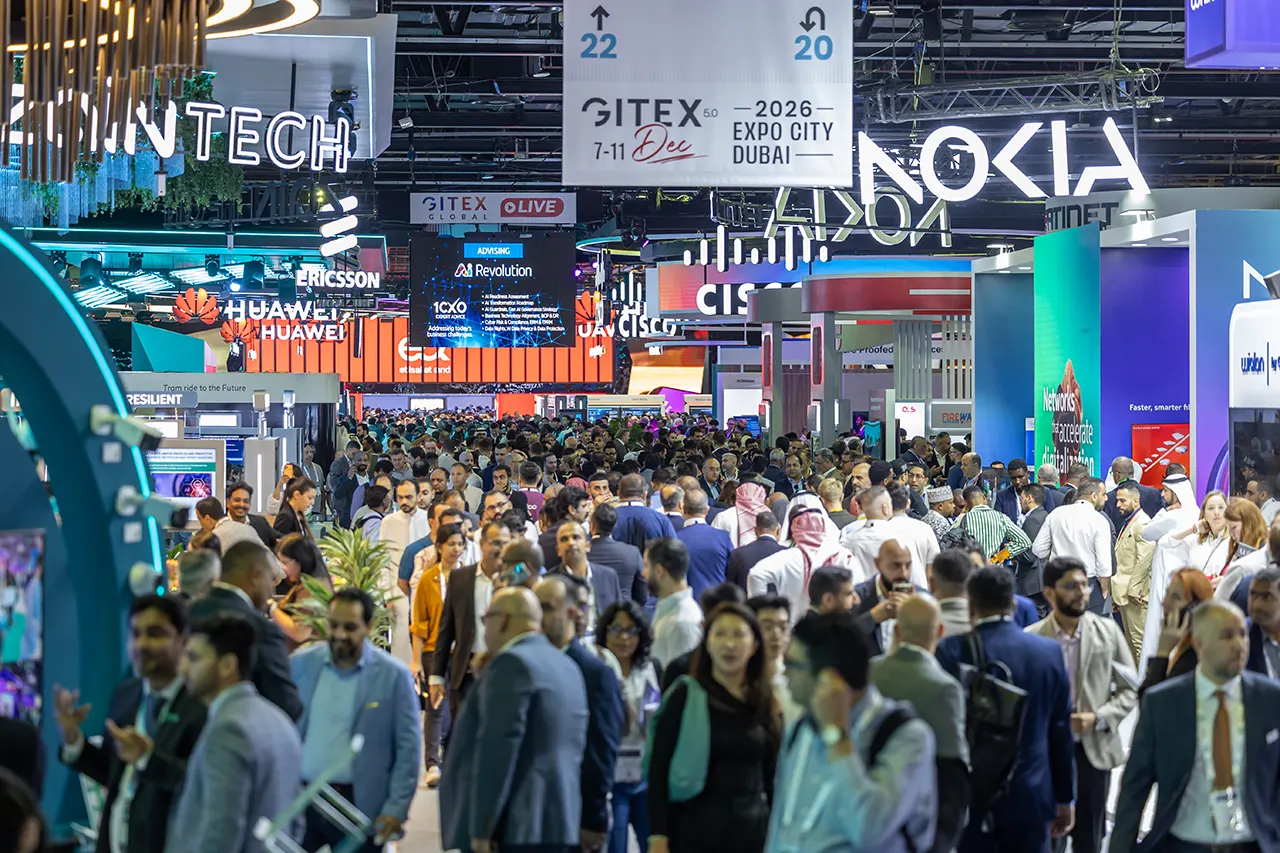
Dubai is preparing to welcome the global technology industry for GITEX GLOBAL 2026, an edition that marks a significant turning point in the event’s history. Scheduled for December 7–11, 2026, the exhibition is moving to a new home at Dubai Exhibition Centre (DEC), Expo City Dubai, introducing a new format that combines a high-level international summit with four days of exhibitions, conferences, and business networking.
Under the theme “The Global Reset 2027, Through a New Lens“, this year’s edition will bring together technology companies, government institutions, investors, startups, and industry leaders to examine how artificial intelligence, computing infrastructure, energy, cybersecurity, and emerging technologies are reshaping the global economy.
The timing is particularly significant. As countries and businesses approach 2027, technological competitiveness is increasingly determined not only by software innovation and access to advanced AI models, but also by the availability of computing resources, semiconductor manufacturing capabilities, reliable energy infrastructure, data sovereignty, and the ability to translate technological development into sustainable economic growth.
With more than 6,000 participating technology enterprises, government entities, and startups, alongside more than 400 government entities and over 750 investors managing nearly US$2 trillion in assets, GITEX GLOBAL 2026 is positioning itself as an important international platform where these priorities converge.
A New Chapter: GITEX Moves to Expo City Dubai
One of the most significant developments surrounding the 2026 edition is the relocation of GITEX GLOBAL to Dubai Exhibition Centre at Expo City Dubai. After decades of establishing its position at Dubai World Trade Centre, the event is entering a new chapter designed to accommodate its expanding international presence and the growing scale of the technology industries it represents.
The transition also introduces a different event structure. Rather than hosting the entire programme at a single venue, GITEX GLOBAL 2026 will begin with a dedicated summit on December 7 at Dubai World Trade Centre, bringing together senior government officials, policymakers, technology executives, investors, and business leaders for strategic discussions. The main exhibition and conference programme will then move to Dubai Exhibition Centre from December 8–11.
The relocation is part of a wider transformation of Dubai’s exhibition infrastructure. Dubai Exhibition Centre is undergoing a US$2.7 billion expansion intended to establish it as one of the region’s largest purpose-built indoor exhibition venues, providing the capacity and facilities required for major international events.
The new format also reunites GITEX GLOBAL with Expand North Star, its dedicated startup and investor platform, bringing established technology companies, emerging businesses, entrepreneurs, and international investment networks together within the same event ecosystem.
This combination reflects an increasingly important reality in the technology industry: innovation, investment, infrastructure, and commercial deployment are becoming closely interconnected, making international platforms such as GITEX increasingly relevant to companies seeking partnerships and access to new markets.
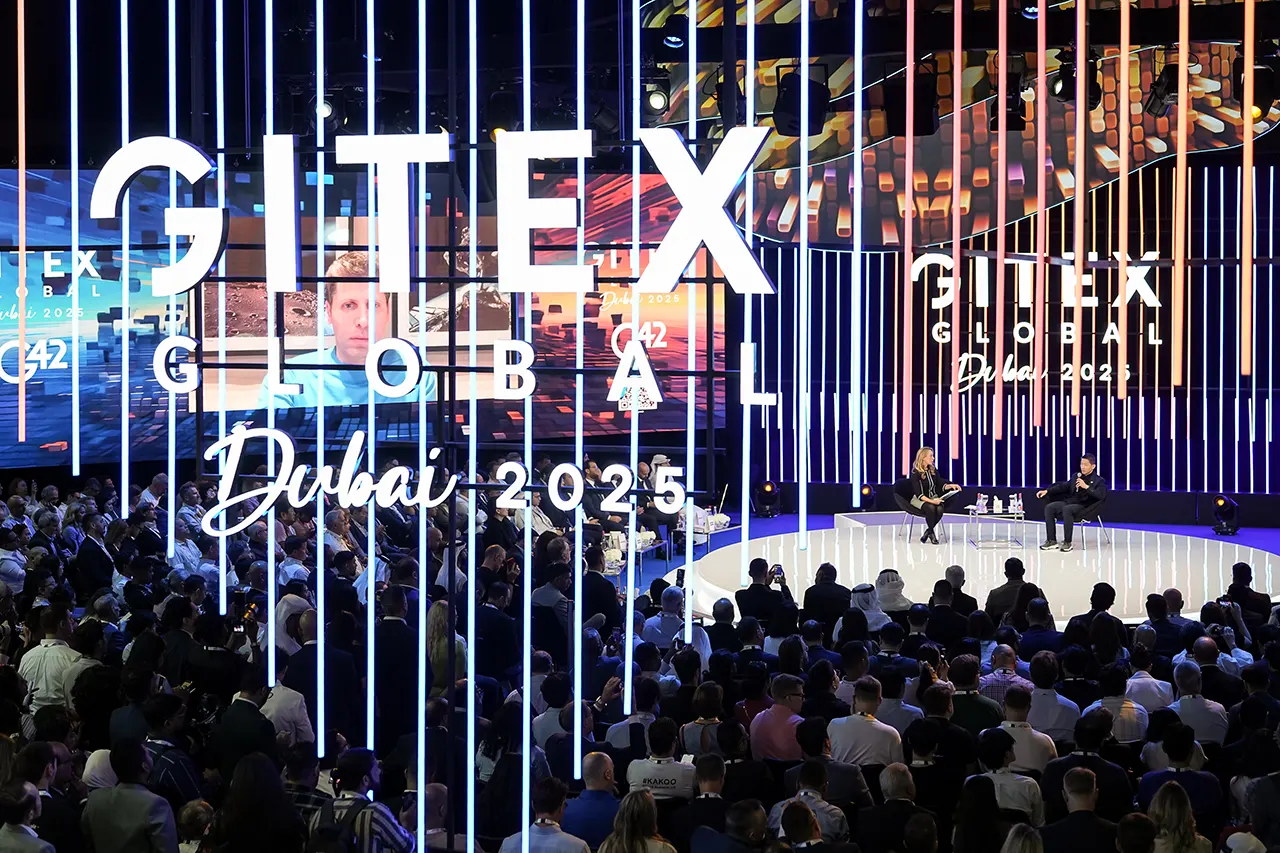
The Global Reset 2027: Technology Becomes a Question of Economic Competitiveness
The central theme of GITEX GLOBAL 2026, “The Global Reset 2027, Through a New Lens”, reflects a fundamental shift in how governments and businesses approach technology. Artificial intelligence is no longer viewed exclusively as a software development opportunity or a tool for improving business productivity. It is increasingly becoming a strategic component of national economic policy, industrial competitiveness, and geopolitical influence.
The global race to develop increasingly capable AI systems has exposed a number of challenges that extend far beyond the development of algorithms. Access to advanced processors, semiconductor manufacturing, high-performance computing, large-scale data centres, reliable electricity, and secure data infrastructure has become essential to building competitive AI ecosystems.
These requirements are also reshaping international investment priorities. Governments are increasingly seeking greater control over their digital infrastructure and data resources, while technology companies are competing to secure the computing capacity, energy resources, and strategic partnerships required to expand their AI operations.
The GITEX Summit, scheduled for December 7 at Dubai World Trade Centre, will address these developments through discussions involving ministers, policymakers, technology executives, investors, and business leaders. Its programme focuses on three major areas: the compute economy, the changing relationship between capital and strategic control, and future technological frontiers.
A particularly important element is the growing relationship between sovereign capital and technology infrastructure. Investment decisions are increasingly influenced by national priorities, supply-chain resilience, digital independence, and access to critical technologies. These developments are creating new opportunities for international cooperation, while introducing more complex questions about technology ownership, regulation, and economic sovereignty.
The summit will also feature closed-door strategic briefings addressing AI, computing infrastructure, sovereign capital, and post-quantum security, reinforcing the event’s focus on the intersection of technology, business, and government policy.
AI Infrastructure Takes Centre Stage: Data Centres, Semiconductors and Energy
One of the most important developments at GITEX GLOBAL 2026 is the increased attention given to the physical infrastructure behind artificial intelligence. The rapid expansion of generative AI, large language models, and increasingly sophisticated AI workloads is creating unprecedented demand for computing resources, high-bandwidth memory, advanced processors, networking technologies, and data-centre capacity.
This shift is changing the competitive landscape of the technology industry. While the development of AI models continues to attract considerable attention, the ability to manufacture, deploy, power, and operate the infrastructure required to run those models is becoming equally important.
GITEX GLOBAL 2026 will address this transformation through dedicated showcases covering data centres, semiconductors, intelligent connectivity, and energy infrastructure.
The introduction of GITEX Super Data Centre highlights the growing importance of hyperscale computing facilities and the supporting technologies required to operate them. This includes advanced server platforms, high-density computing systems, cooling technologies, power distribution, networking infrastructure, and enterprise storage solutions.
For the hardware industry, these developments are particularly relevant. The growing demand for AI computing is influencing processor architectures, GPU development, memory bandwidth requirements, storage performance, and thermal management. It is also creating new opportunities for manufacturers supplying the components and infrastructure required by hyperscale data centres and enterprise AI deployments.
The semiconductor ecosystem will receive additional attention through the event’s dedicated technology showcases, including semiconductors and advanced computing. Companies such as AMD, Intel, ASUS, Supermicro, and other major technology manufacturers are among the participating industry names identified in the event overview.
Energy is another critical part of this equation. AI data centres require substantial and continuous electricity supplies, while their increasing computing density places additional demands on cooling systems and power infrastructure. Consequently, the expansion of AI capabilities is becoming closely linked to energy generation, grid capacity, efficiency, and sustainable infrastructure development.
The introduction of GITEX New Energy reflects this relationship, bringing energy technologies into the broader discussion about the future of intelligent computing.
The official conference programme reinforces this direction by placing data centres, energy, chips, fabrication, and physical AI within its wider discussion of the compute economy.
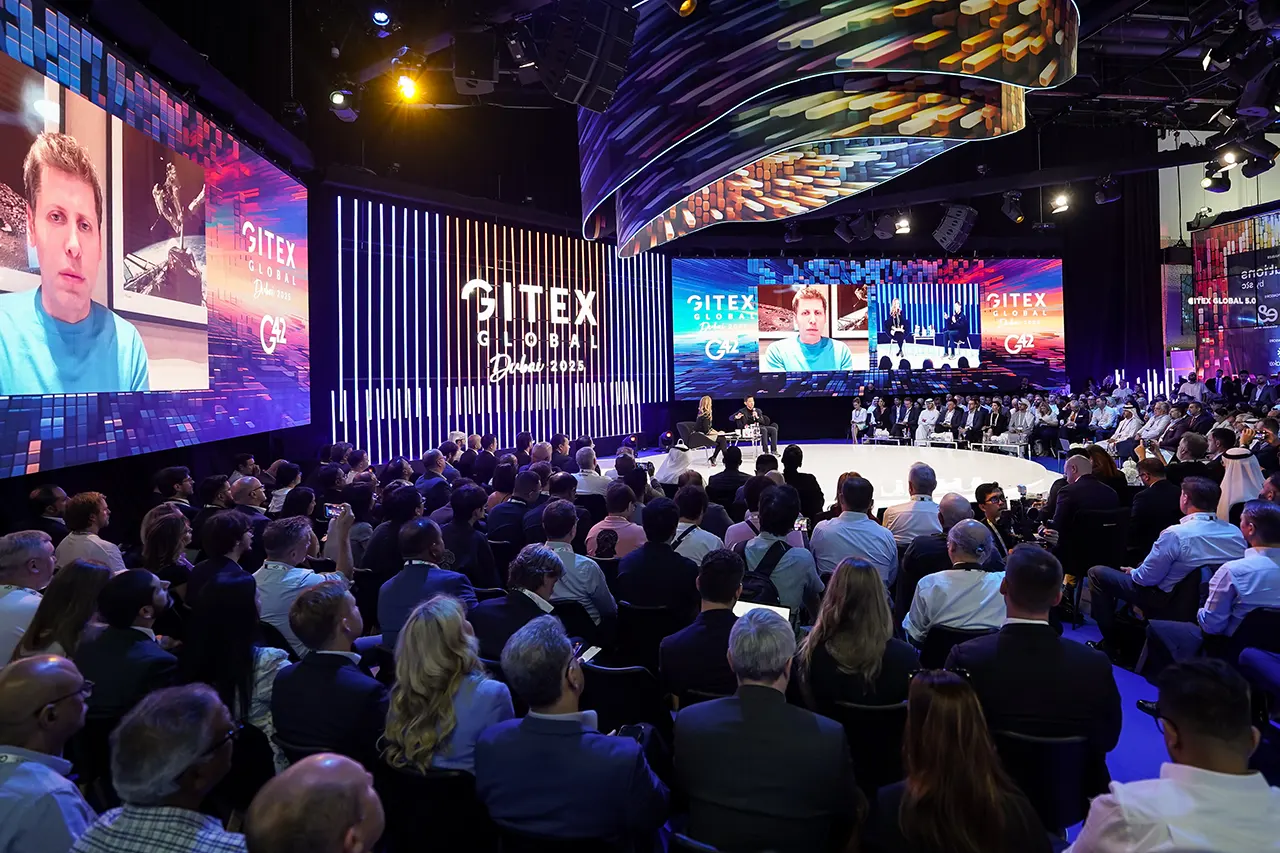
Beyond Generative AI: Robotics and the Rise of Physical AI
Artificial intelligence is increasingly moving beyond digital environments and into physical systems capable of interacting with the real world. Robotics, autonomous mobility, industrial automation, and intelligent machines are becoming important areas of development as AI models gain the ability to interpret their surroundings, make decisions, and control physical operations.
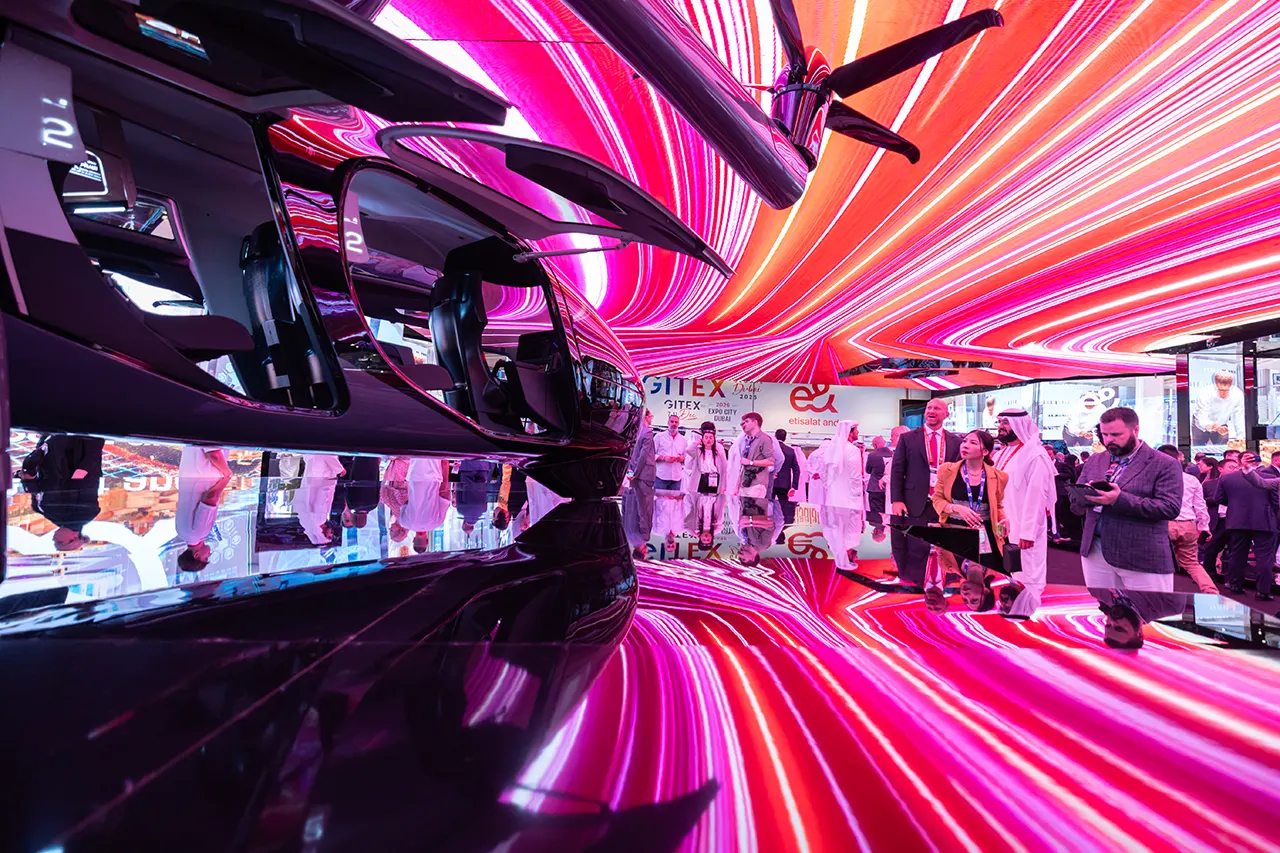
GITEX GLOBAL 2026 will dedicate significant attention to this transition through GITEX World Robotix and GITEX MobX, bringing together developments in robotics, intelligent mobility, and autonomous systems.
The programme is expected to cover humanoid robots, quadruped platforms, service robots, industrial automation, and electric vertical take-off and landing aircraft (eVTOLs). Participating companies identified in the event overview include Unitree, Ant Group Robotics, Booster Robotics, and Pudu Robotics, alongside mobility company Joby Aviation.
These technologies represent a significant evolution in the application of artificial intelligence. Instead of simply processing information or generating content, physical AI systems combine perception, decision-making, and mechanical control to perform tasks in industrial, commercial, and public environments.
Humanoid robotics, in particular, is attracting growing interest as manufacturers work to develop machines capable of operating in environments originally designed for people. Meanwhile, service robots are finding applications in hospitality, logistics, healthcare, and commercial operations.
Autonomous mobility represents another important area. Joby Aviation, for example, is developing fully electric aircraft capable of vertical take-off and landing, with plans to introduce electric air taxi services in Dubai through a proposed network of four vertiports.
The broader significance of these developments lies in the transition from AI experimentation to practical deployment. The commercial success of physical AI will depend not only on improvements in AI models, but also on sensor technologies, processors, connectivity, power efficiency, mechanical engineering, safety systems, and the ability to integrate autonomous machines into existing operations.
For technology manufacturers and investors, this represents an expanding market that connects semiconductors, computing, software, robotics, and industrial infrastructure.
Quantum Computing, Cybersecurity and the Next Generation of Digital Security
As digital infrastructure becomes increasingly interconnected and AI systems assume more responsibilities, cybersecurity is becoming a fundamental requirement for the intelligent economy.
The expansion of autonomous AI agents, cloud infrastructure, connected devices, and critical digital services introduces new security challenges. Organisations must increasingly protect not only their networks and data, but also the systems making decisions and performing operations on their behalf.
GITEX GLOBAL 2026 will address these challenges through GITEX Cyber Valley, with a focus on AI security, advanced cyber threats, digital infrastructure protection, and post-quantum readiness.
The programme reflects a changing cybersecurity landscape in which traditional approaches to network and endpoint protection must evolve alongside increasingly sophisticated attacks and automated threats.
Another important area is quantum computing. Although practical large-scale quantum computing remains an evolving field, its potential implications for modern encryption and information security are already influencing research and long-term security planning.
The emergence of cryptographically relevant quantum computers could eventually challenge some of the public-key cryptographic systems currently protecting digital communications and sensitive information. This makes post-quantum cryptography and migration planning increasingly important for governments, financial institutions, technology companies, and critical infrastructure operators.
GITEX’s wider programme also includes GITEX Quantum Expo, reflecting the growing intersection between quantum technologies, advanced computing, scientific research, and investment.
The participating ecosystem includes companies working across cybersecurity, cloud infrastructure, and enterprise protection, including Acronis, CrowdStrike, Fortinet, Kaspersky, SentinelOne, Trend Micro, and other industry players.
LIVX by GITEX: Bringing Artificial Intelligence into Healthcare and Longevity Research
Another notable addition to the 2026 programme is LIVX by GITEX, a new platform connecting artificial intelligence, biotechnology, healthcare, and longevity research.
The initiative reflects the growing role of AI in scientific discovery and the development of new approaches to healthcare. Machine learning and advanced computational methods are increasingly being applied to drug discovery, genomic analysis, precision diagnostics, and biological research, creating opportunities to accelerate processes that have traditionally required extensive time and resources.
LIVX will bring together participants from research institutions, healthcare organisations, biotechnology companies, and investment communities to explore how these technologies can move from scientific research into practical applications.
The event overview identifies the Institute for Healthier Living Abu Dhabi, the Buck Institute for Research on Aging, and Insilico Medicine among the participating organisations.
Its programme will examine areas including AI-driven drug discovery, genomics, regenerative medicine, and precision healthcare, while connecting scientific developments with commercial opportunities and investment.
The inclusion of longevity and biotechnology within GITEX’s broader technology ecosystem is significant because it demonstrates how the boundaries of the technology industry are expanding. AI is no longer limited to computing, communications, and enterprise software; it is increasingly becoming an enabling technology across scientific disciplines and industries.
Global Technology Leaders and the Companies Shaping the Next Generation of Computing
GITEX GLOBAL 2026 will bring together an extensive lineup of international technology companies representing different segments of the global technology ecosystem, from semiconductor development and cloud computing to enterprise software, cybersecurity, networking, and intelligent infrastructure.
The announced exhibitors include some of the industry’s most influential companies, such as AMD, Intel, ASUS, Acer, Alibaba Cloud, Amazon Web Services, Cisco, Dell Technologies, Google, HPE, Huawei, IBM, Lenovo, Microsoft, Nokia, Oracle, Salesforce, Siemens, Supermicro, Tencent Cloud, and many others.
For the computing hardware industry, the participation of these companies makes GITEX particularly relevant. The development of AI infrastructure is creating demand across the entire hardware supply chain, including processors, GPUs, high-performance memory, enterprise storage, networking equipment, power systems, and advanced cooling technologies.
Companies operating in enterprise storage and data-centre infrastructure will also have an important presence, including Vertiv, NetApp, Everpure (Pure Storage), Cohesity, Commvault, and Veeam.
Meanwhile, the participation of major cloud providers and enterprise software companies highlights the growing importance of integrated AI platforms, where computing infrastructure, software, data management, and security must work together to support increasingly complex workloads.
The diversity of participating companies also illustrates how AI is becoming an industry-wide transformation rather than a technology segment limited to a handful of specialist manufacturers.
Startups, Unicorns and the Global Race for Technology Investment
Beyond established technology manufacturers, GITEX GLOBAL 2026 will provide an international platform for startups, emerging technology companies, and investors seeking opportunities across the next generation of technology markets.
The event overview identifies a group of participating unicorns with a combined valuation of approximately US$76 billion, representing several important areas of technological development.
Among them is Scale AI, which specialises in data infrastructure and services supporting the development and training of AI models. Its participation reflects the growing importance of high-quality training data, model evaluation, and human feedback in the development of advanced AI systems.
Another notable participant is Genspark, an AI-powered workspace designed to help users create business deliverables through multiple AI models, while Axelera AI represents the growing European semiconductor ecosystem, focusing on AI inference hardware.
The quantum computing sector will also be represented by companies such as Terra Quantum, a Swiss quantum technology company, and Pasqal, which develops neutral-atom quantum computing systems.
Meanwhile, China’s AGIBOT brings another important dimension to the event through its work in humanoid robotics and embodied AI systems.
These companies illustrate the diversity of emerging technology investment opportunities, spanning AI infrastructure, specialised computing hardware, quantum technologies, robotics, and enterprise AI platforms.
The startup and investment ecosystem will be further supported by Expand North Star, which returns alongside GITEX GLOBAL from December 8–11 at Expo City Dubai.
The importance of this platform extends beyond providing exhibition space for startups. By connecting emerging companies with international investors, established technology businesses, government representatives, and potential commercial partners, Expand North Star helps bridge the gap between technological innovation and market deployment.
The official GITEX Connect programme also highlights the scale of its business-matching ambitions, announcing more than 15,000 facilitated meetings involving over 6,700 technology leaders, government representatives, investors, and innovators.
Dubai and the Middle East: Strengthening Their Position in the Global Technology Economy
The significance of GITEX GLOBAL 2026 extends beyond the exhibition itself. Its expansion and growing international participation reflect the increasing role of the Middle East in global technology investment, digital infrastructure development, and the adoption of artificial intelligence.
The UAE has been investing heavily in digital transformation, cloud infrastructure, AI capabilities, and advanced technology ecosystems. These priorities are creating opportunities for international technology companies seeking to establish regional operations, develop partnerships, and access markets across the Middle East, Africa, and South Asia.
Dubai’s position as an international business and logistics hub provides an additional advantage, connecting technology manufacturers, distributors, investors, governments, and enterprise customers across multiple regions.
For the MENA technology industry, the increasing focus on AI infrastructure is particularly relevant. Regional investments in data centres, cloud services, connectivity, and enterprise computing are creating new opportunities for companies operating throughout the technology supply chain.
This includes semiconductor and server manufacturers, networking vendors, storage providers, cooling and power infrastructure companies, cybersecurity specialists, and software developers.
The participation of more than 400 government entities also gives GITEX an important policy dimension. Governments are not simply attending to explore new technologies; they are increasingly involved in shaping national AI strategies, digital infrastructure projects, cybersecurity frameworks, and technology investment policies.
For regional businesses, the opportunity lies in translating these developments into practical partnerships, technology adoption, and new commercial opportunities.
GITEX GLOBAL’s new home at Expo City Dubai further supports this ambition. The Dubai Exhibition Centre expansion forms part of a wider AED 10 billion development masterplan, with its first phase designed to deliver 140,000 square metres of exhibition space and accommodate up to 50,000 visitors daily.
ArabOverclockers Returns as Official Media Partner for GITEX GLOBAL 2026
For ArabOverclockers, GITEX GLOBAL represents an important platform for following the developments shaping the international technology industry and strengthening connections between global technology manufacturers and the MENA market.
As an official media partner for GITEX GLOBAL 2026 for the second consecutive year, ArabOverclockers continues its commitment to delivering professional technology coverage to Arabic-speaking audiences across the Middle East and North Africa.
The 2026 edition is particularly relevant to the publication’s coverage priorities, with its extensive focus on AI computing infrastructure, semiconductors, enterprise hardware, storage technologies, networking, cybersecurity, and emerging computing architectures.
The growing importance of AI infrastructure also creates an opportunity to examine technologies beyond the software layer, including the processors, graphics accelerators, memory systems, storage platforms, power solutions, and cooling technologies required to support modern AI workloads.
Through its coverage, ArabOverclockers aims to bring its audience closer to the companies, technologies, and industry developments shaping this transformation, while highlighting innovations and business opportunities relevant to the regional technology ecosystem.
A New Era for GITEX and the Global Technology Industry
GITEX GLOBAL 2026 arrives at a moment when the technology industry is undergoing a fundamental transformation. Artificial intelligence is changing the way businesses operate, governments approach economic competitiveness, and technology manufacturers develop the next generation of computing platforms.
However, the next stage of this transformation will depend on much more than advances in AI models. Semiconductor manufacturing, computing infrastructure, energy availability, data sovereignty, cybersecurity, and international investment will increasingly determine which countries and companies can translate technological innovation into long-term competitive advantages.
By bringing these interconnected industries together, GITEX GLOBAL 2026 is positioning itself as more than a traditional technology exhibition. Its new format, expanded infrastructure, international participation, and broader focus on emerging industries reflect an ambition to create a platform where the future of the intelligent economy can be discussed, demonstrated, and developed through international cooperation.
As Dubai prepares to welcome the global technology community in December, the event will provide an important opportunity to examine how the next generation of AI and computing technologies is evolving, and what that transformation means for businesses, governments, and the wider technology industry.