Artificial intelligence is no longer simply a software layer added to existing products and platforms. In 2026, it has become a force reshaping the infrastructure that underpins the entire digital economy. From data centers and high-performance computing to robotics and autonomous vehicles, and from networking and communications to energy and cybersecurity, the industry is moving toward a deeply interconnected ecosystem that requires collaboration across sectors that once operated largely independently.
That shift was on full display at COMPUTEX 2026, held in Taipei from June 2–5, 2026, under the theme “AI Together”. The theme was more than a slogan. It was reflected in the companies taking part, the technologies and solutions on display, the conference agenda, and even the way COMPUTEX extended beyond the traditional exhibition halls into different parts of Taipei.
According to the event’s official post-show report, COMPUTEX 2026 welcomed 111,312 visitors from 152 countries, representing 28% year-over-year growth. More than 1,500 exhibitors from 32 countries occupied around 6,000 exhibition booths, while InnoVEX, the event’s startup and innovation platform, attracted 44,038 professionals, up 30% year over year.
But the numbers alone do not explain the significance of this year’s event. A closer look at COMPUTEX 2026 reveals that the industry is moving beyond the development of increasingly capable AI models toward building the complete infrastructure required to deploy those models at scale, from computing and data centers to edge devices, robotics, and the physical world itself.
COMPUTEX 2026 by the Numbers: Growth Beyond the Exhibition Floor
Growth was evident across nearly every major indicator at this year’s event.
Global attendance reached 111,312 visitors from 152 countries, a 28% increase from the previous year. At the same time, more than 1,500 exhibitors from 32 countries participated, representing 7% year-over-year growth, while the number of exhibition booths reached approximately 6,000, up 25%.
These figures become even more significant when considering the breadth of the companies and technologies represented. COMPUTEX brought together major global technology companies and startups across semiconductors, cloud infrastructure, computing, networking, storage, robotics, gaming, communications, and IoT.
More importantly, the growth was not limited to exhibition space or visitor numbers. It extended into the commercial and professional activity taking place throughout the event, reinforcing COMPUTEX’s position as an industrial platform rather than simply another technology exhibition.
Three Pillars Shaping the Future of Computing
COMPUTEX 2026 was organized around three major technology pillars that closely reflect the direction in which the industry is moving.
AI & Computing
The first pillar focused on the computing foundation of the AI era, spanning cloud infrastructure and high-performance computing (HPC) through to quantum processing, generative AI, and advanced digital twin applications.
One of the clearest messages emerging from the show was that scaling AI is not simply a matter of developing faster processors. It requires a fundamental rethink of the entire computing stack, including servers, networking, storage, data centers, and cloud infrastructure.
Robotics & Mobility
The second pillar moved AI beyond the digital environment and into the physical world.
COMPUTEX showcased Physical AI through autonomous vehicles, Vehicle-to-Everything (V2X) communications, Mobility-as-a-Service (MaaS), and autonomous mobile robots (AMRs).
This represents a fundamental change in how AI is defined. Its capabilities are no longer measured only by how well it can process information or generate an answer, but also by its ability to perceive its surroundings, make decisions, interact with the environment, and act in the real world.
Next-Gen Tech
The third pillar expanded the discussion beyond conventional computing, covering Beyond 5G (B5G), SpaceTech and satellite communications, NetZero and sustainability, and cybersecurity architectures built around the Zero Trust model.
The broader message is clear: the infrastructure required for the AI era is not about computing alone. It is an interconnected ecosystem involving communications, energy, security, and sustainability.
From HPC to Edge AI: Redefining the Computing Ecosystem
Perhaps one of the most important conclusions from COMPUTEX 2026 is that computing is gradually moving away from a purely centralized model built around data centers toward a distributed ecosystem stretching from HPC and hyperscale infrastructure to Edge AI, connected devices, and autonomous machines.
At one end of this ecosystem are massive computing facilities capable of processing increasingly complex models and enormous volumes of data. At the other are devices that need to run AI closer to the user, machine, vehicle, or environment in which they operate.
That shift explains the growing interdependence between processors, networking, storage, cooling, power, cybersecurity, and software. As AI workloads continue to expand, every layer of the infrastructure stack faces new demands.
The fundamental question is therefore changing.
It is no longer simply:
How fast can the processor be?
It is becoming:
How do we build a complete computing ecosystem capable of running AI efficiently and at global scale?
That distinction is one of the reasons COMPUTEX 2026 felt fundamentally different from an event focused primarily on product launches.
Physical AI: When Artificial Intelligence Enters the Real World
The prominence of Physical AI was one of the clearest indicators of the next stage of the industry.
AI is no longer being presented solely as technology running inside servers, smartphones, and PCs. It is increasingly becoming a decision-making layer capable of controlling autonomous physical systems.
The ecosystem includes autonomous mobile robots, self-driving vehicles, V2X technologies, and intelligent mobility platforms.
COMPUTEX’s official technology roadmap placed Robotics & Mobility among the event’s core pillars, with an explicit focus on Physical AI and autonomous machines.
The significance of this transition should not be underestimated. Previously, an AI system would primarily analyze data and produce an output. Increasingly, it must perceive, understand, decide, and act.
That brings AI together with robotics, sensors, communications, and edge computing, creating a new class of intelligent systems that do not simply generate information but use it to perform actions in the physical world.
Four CEOs, One Stage
The keynote program reinforced this broader vision by bringing four major technology leaders to the COMPUTEX stage:
- Cristiano R. Amon, President and CEO of Qualcomm
- Matt Murphy, Chairman and CEO of Marvell
- Lip-Bu Tan, CEO of Intel
- Rafael Sotomayor, President and CEO of NXP
The four keynote sessions attracted more than 6,000 attendees.
What made the lineup particularly significant was not simply the stature of the speakers, but the breadth of technologies represented by their companies. Qualcomm is deeply involved in edge computing and intelligent devices; Marvell plays a central role in data infrastructure; Intel spans processors and advanced manufacturing; while NXP has a strong presence in embedded systems and automotive technologies.
Bringing these perspectives together under one roof reflects how far the definition of AI has expanded, from edge devices to data centers, vehicles, and industrial systems.
COMPUTEX Forum: AI as an Industrial Platform
The COMPUTEX Forum 2026 expanded the conversation even further. According to the official report, it was the largest forum in COMPUTEX history, attracting more than 13,200 attendees across six major topics and featuring 30 speakers.
The six topics covered:
- Robotics, autonomous machines, and Physical AI
- AI computing, infrastructure, and development
- Generative AI and intelligent content applications
- AI devices, IoT, and edge intelligence
- Applied AI for industrial transformation
- Data intelligence, governance, and security
This breadth reflects a fundamental shift in the industry conversation, from asking “How do we build an AI model?” to asking a much larger question:
How do we integrate AI into the economy, industry, and society in a way that is secure, scalable, and sustainable?
The forum brought together experts and industry leaders from organizations including NVIDIA, Intel, Microsoft, Qualcomm, Marvell, Google DeepMind, KIOXIA, NXP, Schneider Electric, and Siemens, among others.
Visitors Came for Business, Not Just to Look Around
The visitor data provides another important insight into COMPUTEX’s evolving role. A significant portion of attendees arrived with clear commercial and strategic objectives.
44% of registered visitors were from managerial-level positions, including C-level executives, directors, general managers, and managers.
The stated objectives of visitors were equally revealing:
- 43.9% attended for market research.
- 24.8% were looking for strategic partners or solution suppliers.
- 16.4% focused on reaching existing customers.
- 9.4% attended for purchasing purposes.
- 4.4% were looking for investment opportunities.
- 0.9% attended for recruitment.
These figures make it difficult to describe COMPUTEX simply as a venue for showcasing new products.
It has become a global marketplace for ideas, supply chains, investment, partnerships, and technology sourcing.
A Global Audience, With Asia at the Center
COMPUTEX 2026 attracted international visitors from across the globe, although Asia remained by far the largest source of international attendance.
Asia accounted for 66.2% of international visitors, followed by North America at 15.3% and Europe at 11.1%. The Middle East represented 2.5%, while Oceania accounted for 2.2%, South America 1%, Africa 0.8%, and Central America 0.4%.
The distribution highlights Asia’s continued importance to the event, which is hardly surprising given Taiwan’s central position in the global semiconductor and electronics manufacturing ecosystem. At the same time, the breadth of the international attendance demonstrates COMPUTEX’s ability to bring together an industry whose reach extends well beyond Asia.
The ten leading countries and regions by international visitor numbers were:
Japan, the United States, South Korea, China, Hong Kong, Singapore, Vietnam, India, Thailand, and Malaysia.
97.4%: A Strong Signal for COMPUTEX 2027
One of the strongest indicators of the event’s performance is that 97.4% of visitors said they would return or consider visiting COMPUTEX 2027.
The figure does not mean every visitor made a firm commitment to return. Instead, it combines those who said they would come back with those who were considering a return.
Nevertheless, it points to a remarkably high level of intent, particularly when considered alongside the growth in attendance, the strong representation of senior decision-makers, and the volume of commercial activity taking place at the show.
From that perspective, COMPUTEX’s success cannot be measured simply by how many people entered the exhibition halls. It also depends on how many found enough value in the event to consider making the trip again the following year.
InnoVEX: Connecting Startups With the Global Market
On the innovation side of the ecosystem, InnoVEX continued to strengthen its position as a platform for startups and emerging technologies.
The event attracted 44,038 professionals, representing 30% year-over-year growth. Nearly 500 startups from more than 23 countries and regions participated, with startup participation growing by more than 11%. Nine national pavilions were also represented, from Australia, Canada, the Czech Republic, France, Israel, Italy, Japan, South Korea, and Thailand.
InnoVEX also recorded more than 100 startup technology demonstrations and launches, alongside more than 80 experts and speakers. The total prize pool exceeded US$180,000.
This reinforces another important aspect of the COMPUTEX ecosystem. The event is not only connecting established technology companies with suppliers and customers; it is also helping create a path from idea and innovation to investment, product development, and ultimately the global market.
From Exhibition Floor to Business Deals
Some of the most important activity at COMPUTEX happens away from the public exhibition floor.
The COMPUTEX Sourcing Meetings brought together 106 international buyers and 203 exhibitors across 346 meetings.
Meanwhile, the GPA Procurement Meetings involved 58 international buyers and 115 exhibitors across 311 meetings.
These figures underline the commercial role of the event. COMPUTEX is increasingly a place where companies do more than demonstrate products. They negotiate, identify suppliers, explore partnerships, and pursue procurement opportunities.
The same commercial character is reflected in the professional profile of attendees. Hardware and semiconductors represented the largest industry category among keynote attendees at 28.5%, followed by industrial manufacturing at 11.4%, financial services at 9.7%, media and entertainment at 9.1%, and cloud services at 6.4%.
More Than 81,000 Media Mentions: COMPUTEX Goes Global
The event generated more than 81,000 media mentions and reports, highlighting the scale of international attention surrounding COMPUTEX 2026.
What stands out is that international coverage was not limited to individual products. Much of the commentary focused on the broader transformation taking place across the technology industry.
The Press Trust of India (PTI) described the event as an eye-opening experience that offered a glimpse into a new world of technology and innovation. Meanwhile, Japan’s Diamond Business News highlighted the extent to which AI had captured global attention at COMPUTEX and shaped discussions throughout the exhibition.
Comments from media outlets and content creators in Thailand, Vietnam, and Malaysia similarly reflected strong interest in how global technology companies are adapting their strategies to the AI era.
“AI Together” Extended Beyond the Exhibition Halls
One of the more interesting aspects of COMPUTEX 2026 was that the “AI Together” concept was not confined to TaiNEX and TWTC.
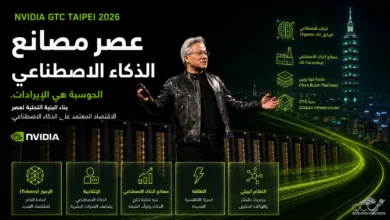
COMPUTEX activities extended across Taipei, alongside events such as NVIDIA GTC Taipei 2026, which further expanded the city’s role as a center for AI discussions and activities. Related events and industry activity also reached locations including TICC and technology hubs in Xinyi and Nangang.
For several days, Taipei effectively became a much larger platform for conversations around artificial intelligence rather than simply a city hosting a technology exhibition.
What Do the Numbers Tell Us About the Future?
Taken together, the figures from COMPUTEX 2026 tell a story that goes well beyond the success of a single trade show.
Visitor numbers grew by 28%, exhibitor numbers by 7%, exhibition booths by 25%, and InnoVEX professionals by 30%, while media coverage exceeded 81,000 mentions.
But the more important change lies in the nature of participation itself.
Managerial-level attendees accounted for 44% of registered visitors. Nearly one-quarter were looking for strategic partners or solution suppliers, while 43.9% attended for market research. At the same time, 97.4% said they would return or consider visiting COMPUTEX 2027.
These are not the characteristics of an event driven primarily by consumer audiences.
They are the indicators of a global industrial platform.
Taiwan at the Center of the Next AI Era
Taiwan is not standing on the sidelines of the AI transformation. It sits at the center of many of the technology layers required to make that transformation possible.
Semiconductors, system manufacturing, servers, networking, storage, components, power and cooling solutions, edge devices, and industrial systems all converge within the ecosystem represented by COMPUTEX.
That is why “AI Together” carries a meaning that extends well beyond cooperation between AI companies.
It reflects the need for collaboration across the entire technology chain, semiconductor designers, manufacturers, server developers, networking providers, software companies, robotics developers, automotive manufacturers, energy and data-center providers, as well as the organizations responsible for security and regulatory frameworks.
This is precisely what the three COMPUTEX pillars, AI & Computing, Robotics & Mobility, and Next-Gen Tech demonstrate.
Conclusion: COMPUTEX Is No Longer Just a PC Show
The results of COMPUTEX 2026 make one thing increasingly clear: the event has moved far beyond its traditional identity as one of the world’s largest exhibitions for PCs and computer components.
The 2026 edition presented something much broader, a global platform bringing together AI infrastructure, semiconductors, high-performance computing, generative AI, robotics, intelligent mobility, communications, sustainability, and cybersecurity within a single industrial ecosystem.
The numbers reinforce that transformation: 111,312 visitors from 152 countries, more than 1,500 exhibitors, approximately 6,000 exhibition booths, 44,038 InnoVEX professionals, nearly 500 startups, more than 13,200 COMPUTEX Forum attendees, and over 81,000 media mentions.
Yet perhaps the most important figure is not the number of visitors or exhibitors, but what those visitors came to accomplish. COMPUTEX has become a place to identify markets, partners, suppliers, investment opportunities, and emerging technologies that will shape the next phase of computing.
In that sense, “AI Together” was not simply a theme for COMPUTEX 2026. It was an accurate description of where the technology industry is heading.
The AI era cannot be built around a single chip, model, or company. It requires an interconnected ecosystem in which computing works alongside communications, energy, manufacturing, software, robotics, and the physical infrastructure that supports them all.
With COMPUTEX 2027 scheduled for June 1–4, 2027, in Taipei, the more important question will no longer be whether AI continues to expand. The real question will be how deeply that expansion reshapes the infrastructure, industries, and physical world around us.