When Cooling Becomes the Real Challenge
For decades, the PC industry has been defined by an endless race toward higher core counts, faster clock speeds, and increasingly powerful processors and graphics cards. Yet as artificial intelligence workloads and accelerated computing continue to reshape the technology landscape, a new reality has emerged: achieving higher performance is no longer the industry’s greatest challenge.
The ability to manage the heat generated by that performance has become the defining factor that determines the true capabilities of modern computing platforms.
This reality was evident throughout COMPUTEX 2026 in Taipei. While many companies focused on unveiling faster CPUs, more powerful GPUs, and next-generation AI hardware, others concentrated on a different problem entirely how to cope with the escalating thermal densities that characterize modern silicon.
Among the many booths we visited during our on-site coverage, Noctua stood out as one of the most interesting destinations at the show. Not because of flashy lighting effects, oversized displays, or aggressive marketing campaigns, but because of the scale and ambition of the engineering projects the Austrian company chose to reveal.
For years, Noctua has been synonymous with premium air cooling, ultra-efficient fans, and an uncompromising approach to acoustic performance. What we saw at COMPUTEX 2026, however, suggested that the company is preparing for a significantly different chapter in its history.
During ArabOverclockers’ visit to the booth, it became clear that Noctua is no longer viewing the future as a series of incremental upgrades to its existing products. Instead, the company appears to be redefining its role within the broader thermal ecosystem.
The firm that built its reputation on quiet operation and engineering precision is now investing heavily in liquid cooling, two-phase thermal systems, advanced interface materials based on carbon nanotube technology, and entirely new approaches to thermal management designed for the next generation of computing hardware.
The message we took away from the booth was straightforward: preserving the engineering philosophy that made Noctua successful does not mean remaining attached to the past. It means evolving that philosophy to meet the thermal demands created by AI-driven computing and increasingly power-hungry hardware.
Inside the Booth: Engineering Over Marketing
Walking into Noctua’s COMPUTEX 2026 booth immediately revealed a company that continues to resist many of the marketing trends dominating the PC cooling industry.
While countless exhibitors relied on RGB-heavy demonstrations and visual spectacle, Noctua focused almost exclusively on measurable performance.
The booth itself was divided into two distinct sections. One area showcased products approaching commercial release, while the other functioned as an open development laboratory where visitors could examine prototype technologies still undergoing active refinement.
One of the most notable aspects of the presentation was Noctua’s reliance on live demonstrations, thermal testing stations, and acoustic measurement equipment instead of traditional promotional displays. Visitors could directly compare products against previous generations while observing real performance metrics in real time.
This approach reflected a level of confidence rarely seen on a trade-show floor and reinforced the company’s longstanding emphasis on engineering validation rather than marketing claims.
During our visit, prototype technologies consistently attracted larger crowds than many of the commercially available products on display. Conversations between engineers, enthusiasts, and industry professionals frequently revolved around two projects in particular: the Thermosiphon cooling system and Noctua’s upcoming carbon nanotube thermal interface technology.
Both projects represent long-term efforts aimed at addressing fundamental thermal bottlenecks rather than delivering incremental improvements.
We also observed numerous representatives from hardware manufacturers and engineering firms spending extended periods examining the prototypes, highlighting the level of industry interest these technologies have generated.
NL-LC1: Noctua’s Historic Entry Into Liquid Cooling
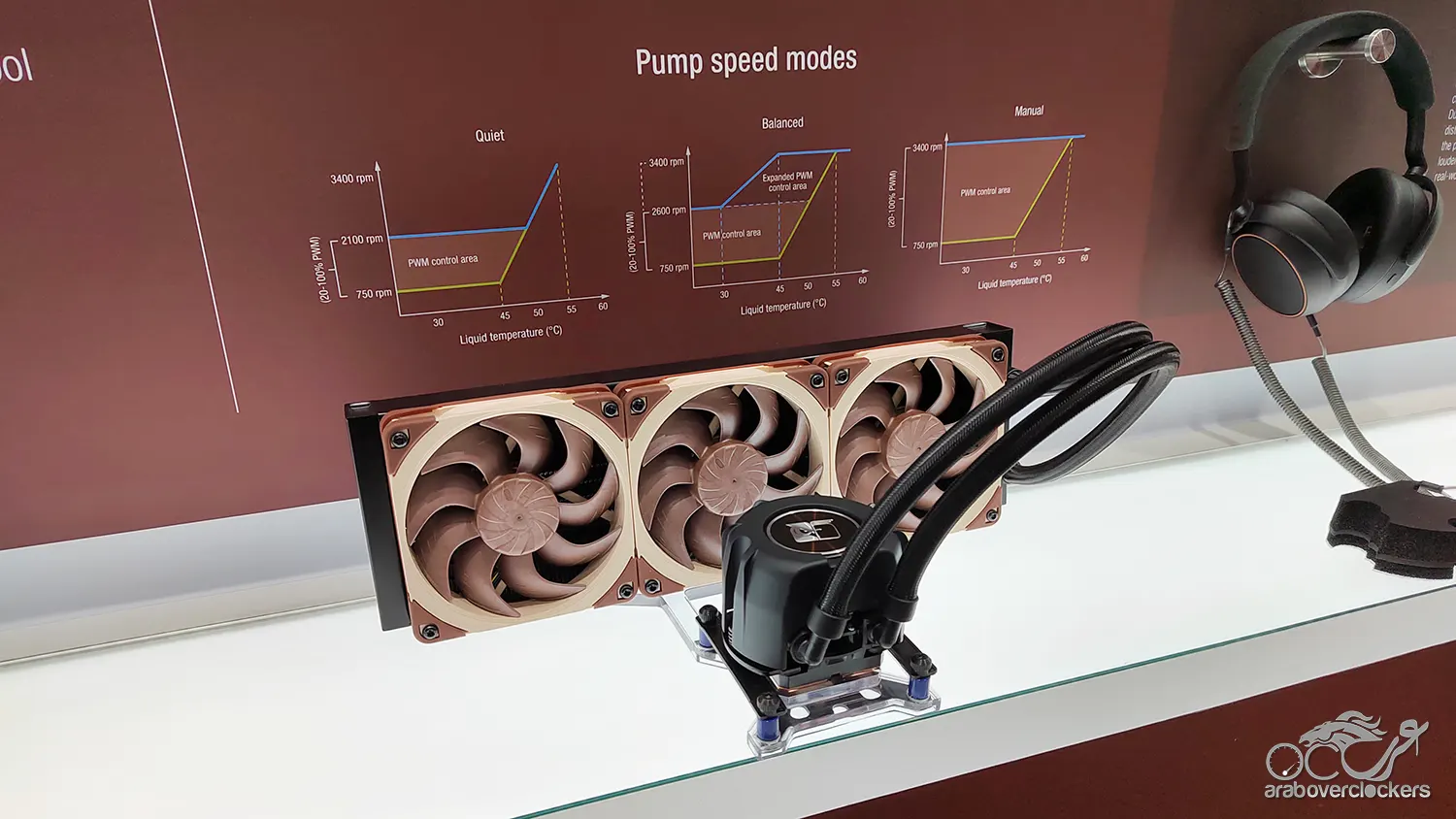
Without question, the biggest announcement at the Noctua booth was the official unveiling of the NL-LC1 all-in-one liquid cooling series.
This launch marks a historic shift for a company that spent years defending premium air cooling while repeatedly refusing to enter the AIO market until it could meet its own standards for reliability, acoustic performance, and engineering quality.
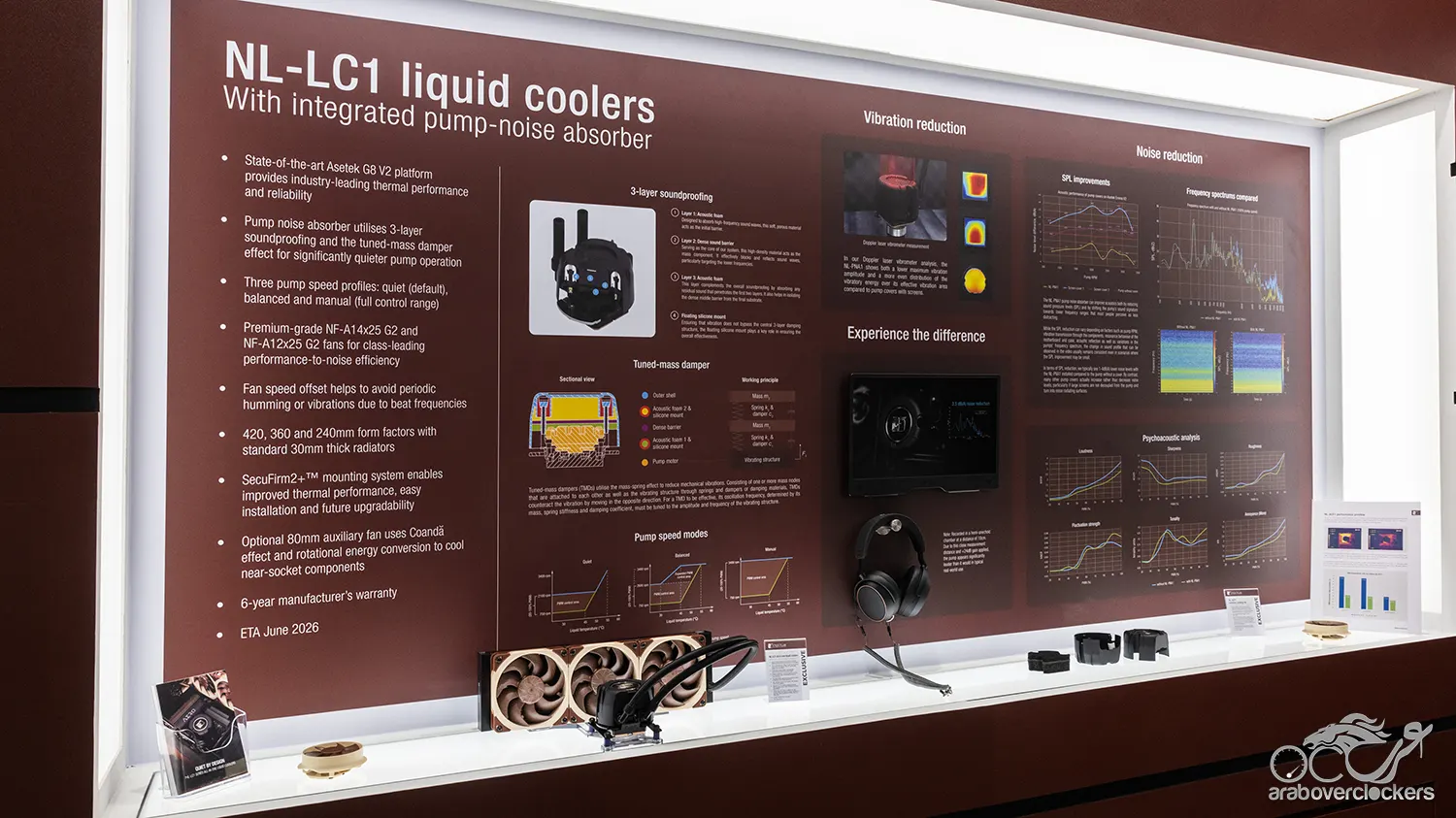
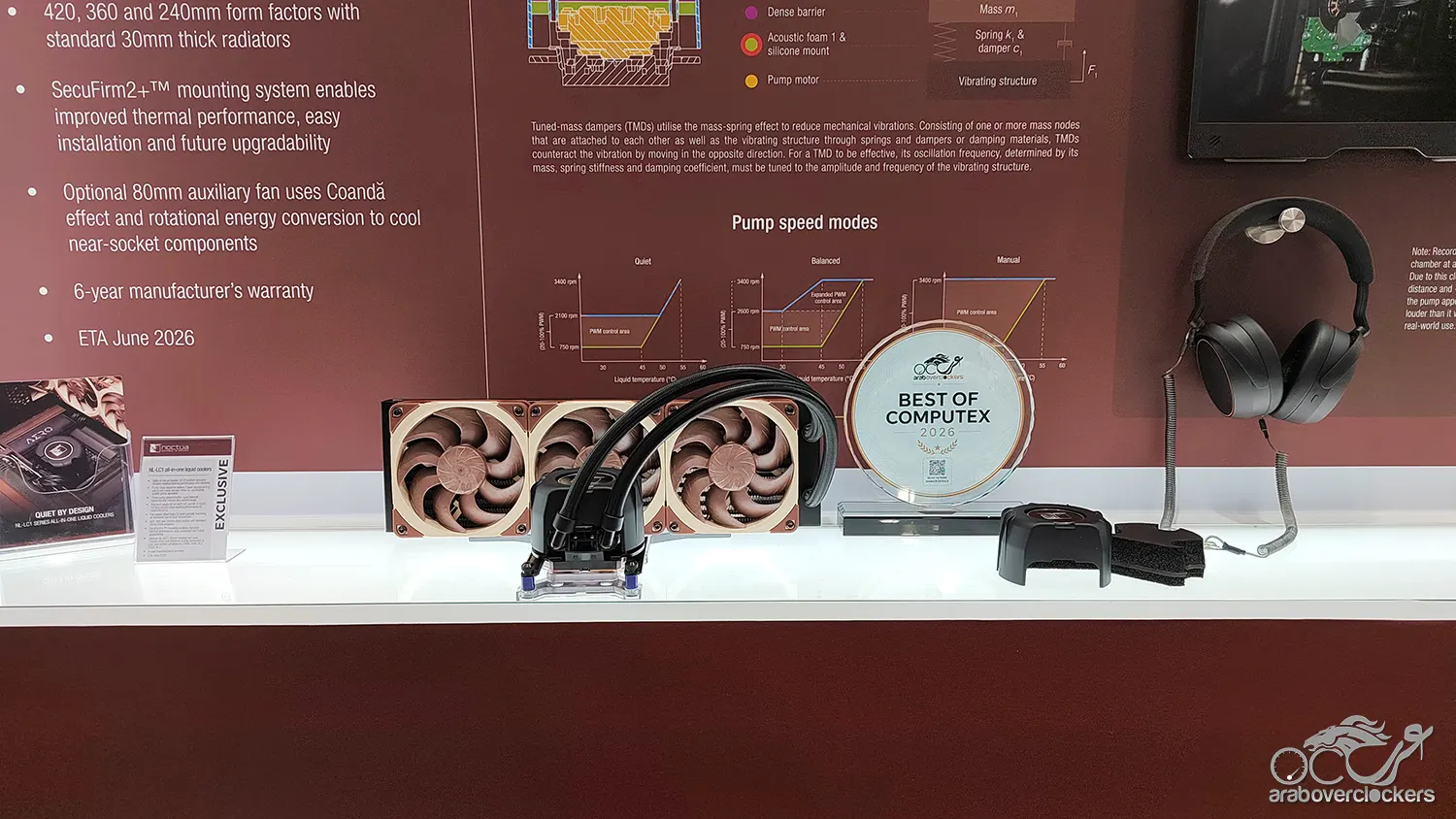
The new series is based on Asetek’s Emma V2 platform, but Noctua has extensively reworked multiple components to align with its design philosophy.
The lineup will be available in 240mm, 360mm, and 420mm configurations, featuring 30mm-thick radiators and a six-year warranty.
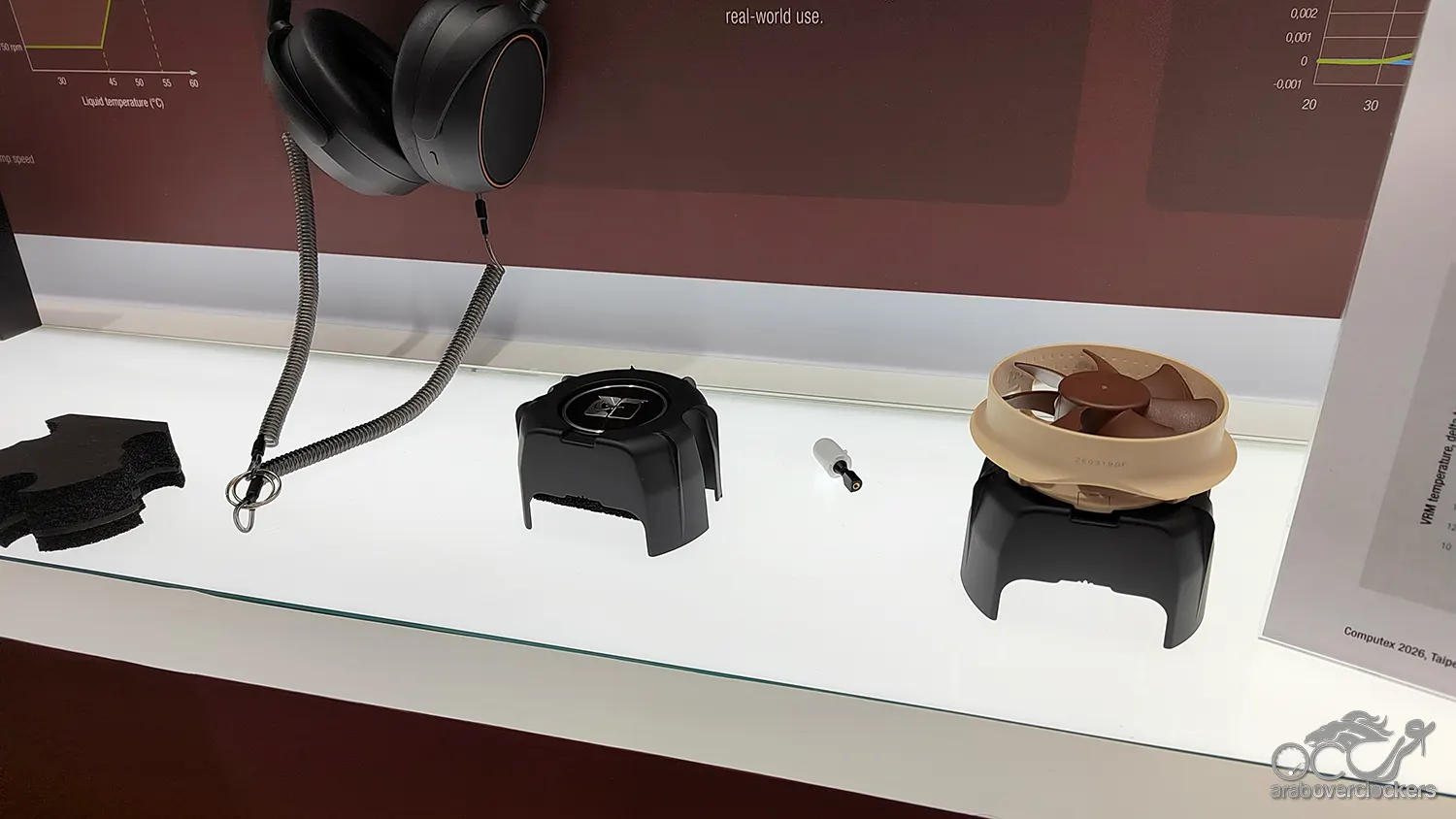
One of the key innovations is the company’s Pump Noise Absorber technology, which utilizes a multi-layer isolation system designed to minimize mechanical vibrations generated by the pump.
The coolers are paired with Noctua’s latest NF-A12x25 G2 and NF-A14x25 G2 fans, incorporating the company’s Speed Offset technology. By allowing fans to operate at slightly different RPMs, the system reduces harmonic resonance and minimizes unwanted acoustic peaks.
From our perspective as long-time observers of the company, the NL-LC1 represents one of the most significant product launches in Noctua’s modern history.
For years, Noctua remained one of the most cautious voices regarding all-in-one liquid cooling solutions. The company consistently maintained that it would only enter the market once it could deliver a product that met its own internal standards.
As a result, the arrival of the NL-LC1 is far more than a new product launch, it is a strategic statement about how Noctua views the future of enthusiast cooling.
The system also introduces the optional NL-ACF1 accessory fan, which magnetically mounts above the pump housing and directs airflow toward VRMs, memory modules, and nearby storage devices to improve overall motherboard cooling.
Thermosiphon: Liquid Cooling Without a Pump
Among the most intriguing technologies displayed at the booth was Noctua’s ongoing Thermosiphon project, developed in collaboration with Calyos.
Unlike conventional liquid cooling systems, the Thermosiphon design operates without a mechanical pump. Instead, it relies entirely on the natural physics of evaporation and condensation to transfer heat through a sealed loop.
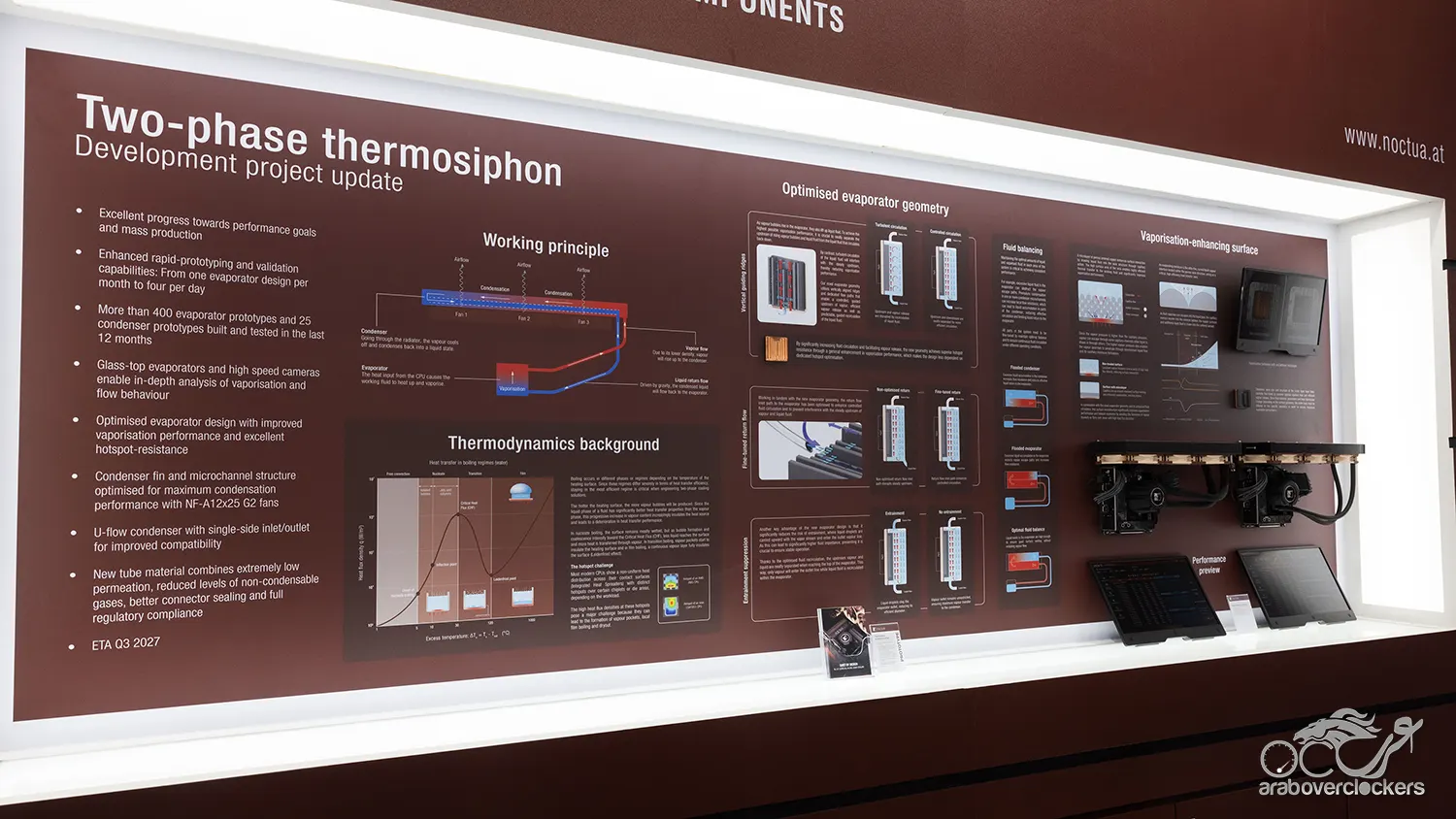
As heat is absorbed from the processor, the coolant evaporates and rises toward the radiator. Once cooled, it condenses and returns downward under the force of gravity, restarting the cycle without the need for any moving liquid transport mechanism.
According to company representatives, development has accelerated significantly over the past year. Engineers are reportedly evaluating multiple evaporator chamber designs on a near-daily basis in an effort to optimize thermal transfer efficiency.
The latest prototypes incorporate a specialized porous copper microstructure within the evaporation chamber to improve fluid circulation while minimizing bubble formation that could otherwise impact performance.
For professional environments where long-term reliability is paramount, the Thermosiphon concept has the potential to become one of the most compelling cooling technologies currently under development.
Unlike traditional AIO solutions, which ultimately depend on pump longevity, the Thermosiphon approach aims to eliminate one of the most common mechanical failure points found in liquid cooling systems.
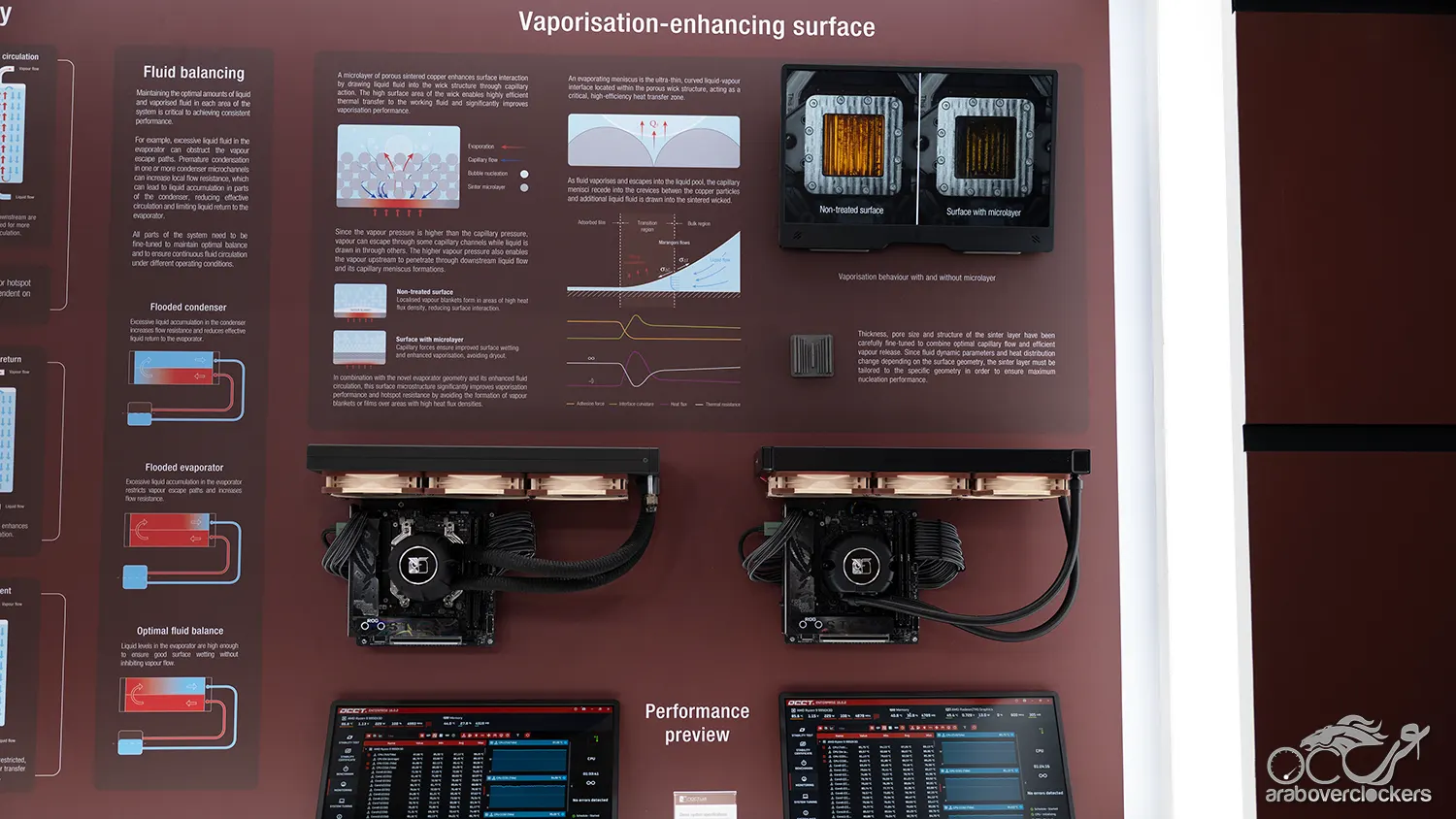
While the technology remains in development, its presence at COMPUTEX 2026 demonstrated that Noctua continues to invest heavily in next-generation cooling architectures rather than focusing solely on incremental improvements to existing products.
NT-CP1: Carbon Nanotubes Replace Traditional Thermal Paste
Another technology that generated substantial interest throughout the booth was the NT-CP1 thermal pad, developed in partnership with Carbice.
Rather than relying on conventional thermal compounds, the NT-CP1 utilizes vertically aligned carbon nanotube arrays designed to improve thermal transfer between the processor and the cooler.
This represents a fundamentally different approach to thermal interface materials.
One of the primary advantages of the design is the elimination of many issues traditionally associated with thermal paste, including drying, degradation, and long-term performance loss.
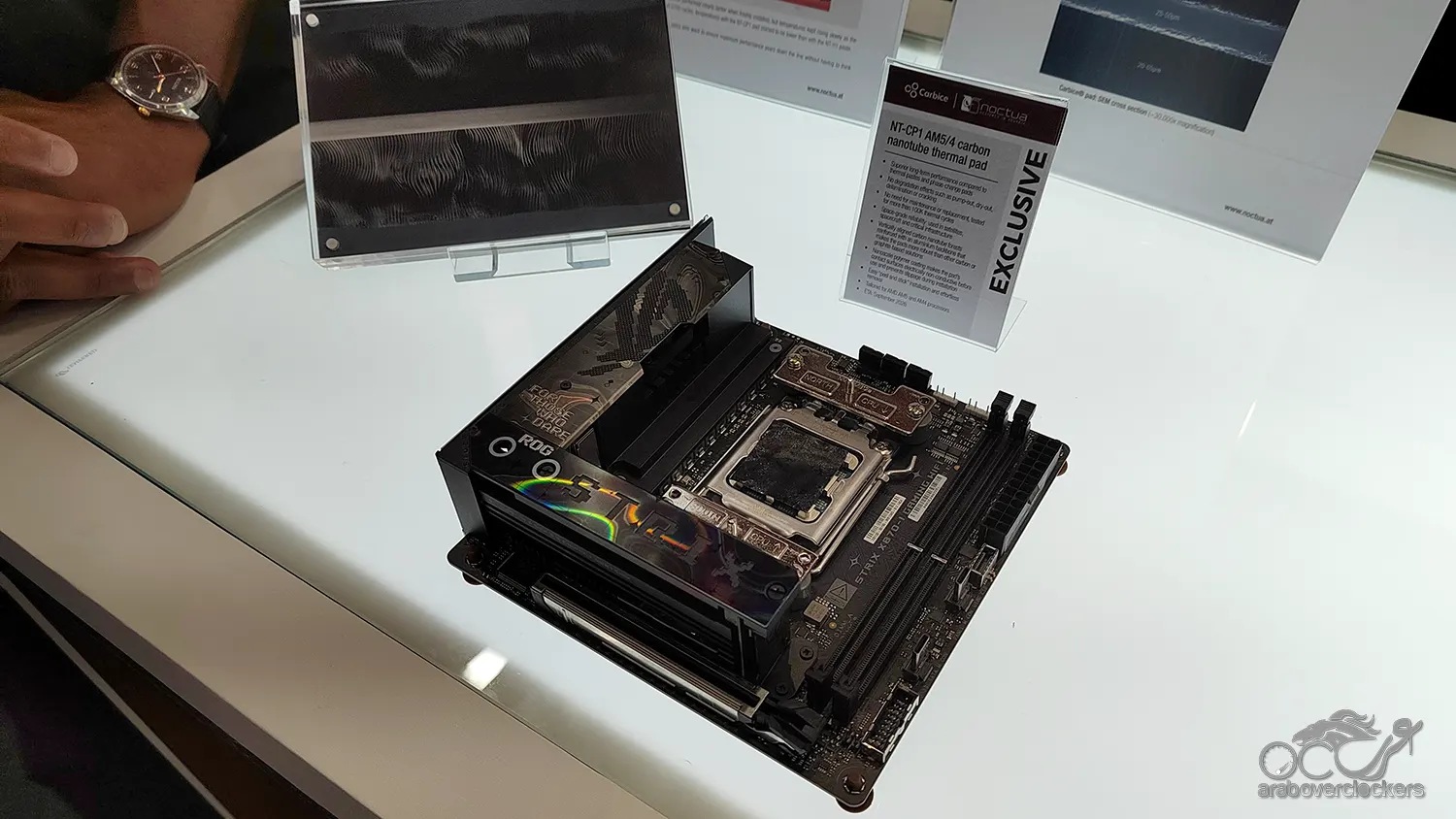
According to Noctua, the NT-CP1 is designed to provide an exceptionally long service life without requiring periodic replacement.
The material is also electrically non-conductive prior to installation, offering a safer alternative to liquid metal solutions that can introduce additional installation risks.
Perhaps the most interesting aspect of the technology is its potential to improve over time as repeated thermal cycles and mounting pressure allow the carbon nanotube structure to conform more effectively to microscopic surface imperfections.
Commercial availability is expected to begin in September 2026, initially targeting AMD’s AM4 and AM5 platforms.
If performance claims translate successfully into real-world deployment, the NT-CP1 could become one of the most significant developments in thermal interface technology in years.
NH-D15 G2 and the Continued Evolution of Air Cooling
Despite the considerable attention given to emerging technologies, Noctua made it clear that air cooling remains a core pillar of its product strategy.
A significant portion of the booth was dedicated to the NH-D15 G2, the successor to one of the most respected air coolers ever produced.
Recognizing that modern processors exhibit varying degrees of integrated heat spreader curvature, Noctua now offers three distinct versions of the cooler:
- Standard Edition
- LBC (Low Base Convexity)
- HBC (High Base Convexity)
Each variant is optimized for different CPU surface characteristics, allowing users to achieve improved contact pressure and thermal transfer efficiency.
The company also showcased production-ready versions of its long-awaited NF-A14x25 G2 fans.
Manufactured using Noctua’s Sterrox liquid-crystal polymer material, these fans feature extremely tight blade-to-frame tolerances that help reduce air leakage while increasing static pressure performance.
The result is improved airflow efficiency without sacrificing the low-noise characteristics that have become synonymous with the Noctua brand.
Comparing COMPUTEX 2025 and COMPUTEX 2026
When comparing this year’s showcase to what Noctua presented at COMPUTEX 2025, the difference is substantial.
Last year’s exhibit focused primarily on refining the company’s traditional air-cooling portfolio while offering limited previews of future technologies.
COMPUTEX 2026, by contrast, presented a far more comprehensive roadmap.
The introduction of the NL-LC1 liquid cooling platform, significant progress on Thermosiphon development, and the unveiling of carbon nanotube-based thermal interface technology collectively demonstrate a broader strategic expansion.
This shift is about more than simply adding new products to the portfolio.
It reflects a deeper transformation in how Noctua views its long-term position within the cooling industry.
Rather than remaining solely an air-cooling specialist, the company appears increasingly focused on becoming a comprehensive thermal engineering organization capable of addressing every stage of the heat management process.
Strategic Partnerships Beyond Traditional Cooling
Noctua’s ambitions this year extended well beyond its own branded cooling products.
Several collaborative projects highlighted the company’s growing influence across multiple segments of the PC ecosystem.
One of the most unusual products on display was the Pulsar Feinmann F01 Noctua Edition gaming mouse.
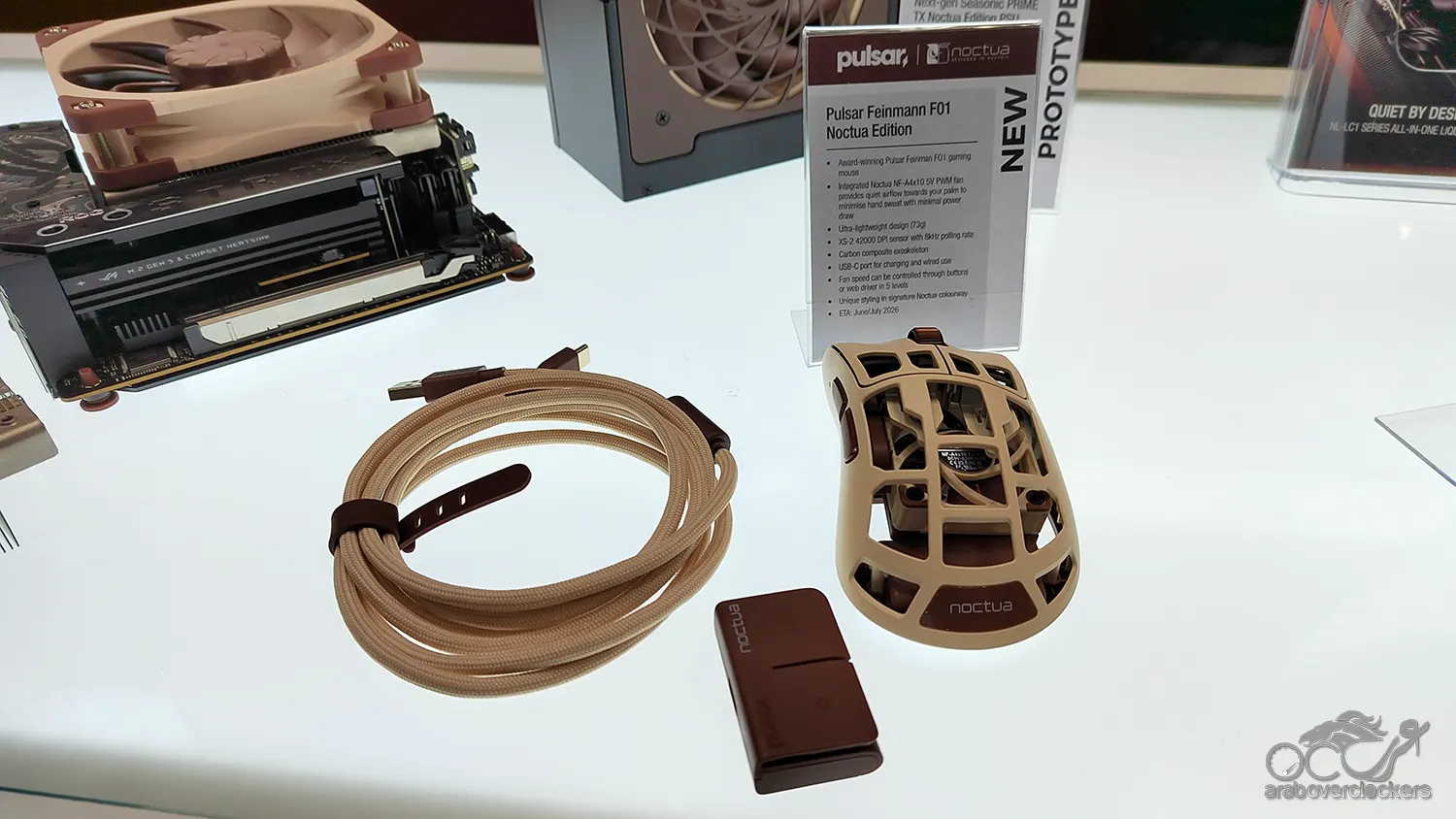
The device combines Pulsar’s expertise in competitive gaming peripherals with Noctua’s thermal engineering background.
Its lightweight carbon-composite chassis houses a miniature NF-A4x10 fan designed to provide continuous airflow across the user’s hand during extended gaming or productivity sessions.
Despite incorporating active cooling, the mouse maintains an impressively low weight of just 73 grams.
From a performance standpoint, the device features a 42,000 DPI sensor and an 8,000Hz polling rate, positioning it firmly within the enthusiast and professional gaming segment.
The second major collaboration involved Thermal Grizzly’s WireView Pro II.
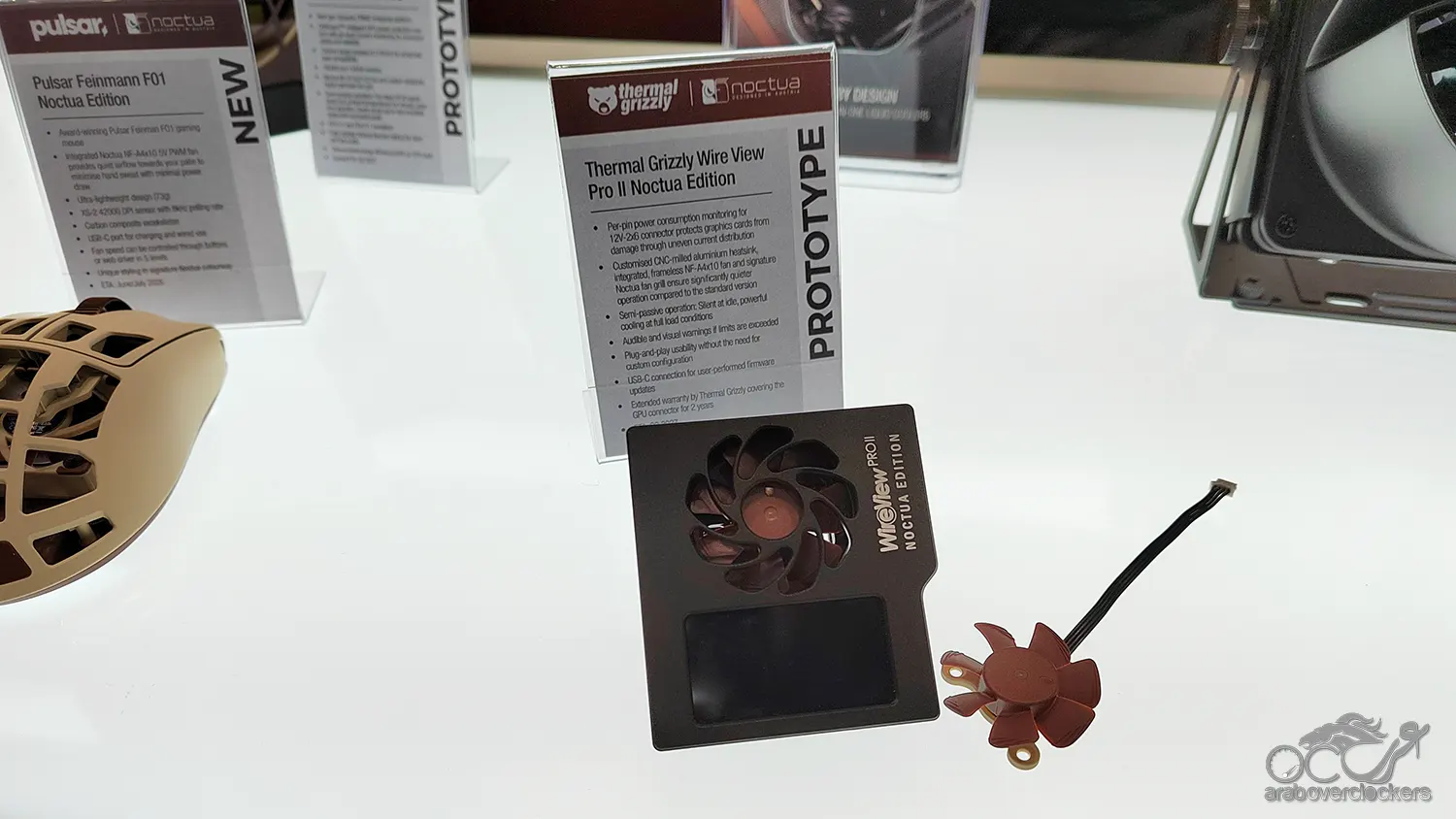
The special Noctua Edition introduces a custom aluminum heatsink and dedicated cooling solution designed to maintain stable operating temperatures while monitoring power delivery in modern graphics cards.
A third partnership with Seasonic produced the Prime TX Noctua Edition power supply, available in capacities up to 1600 watts and compliant with the ATX 3.1 standard.
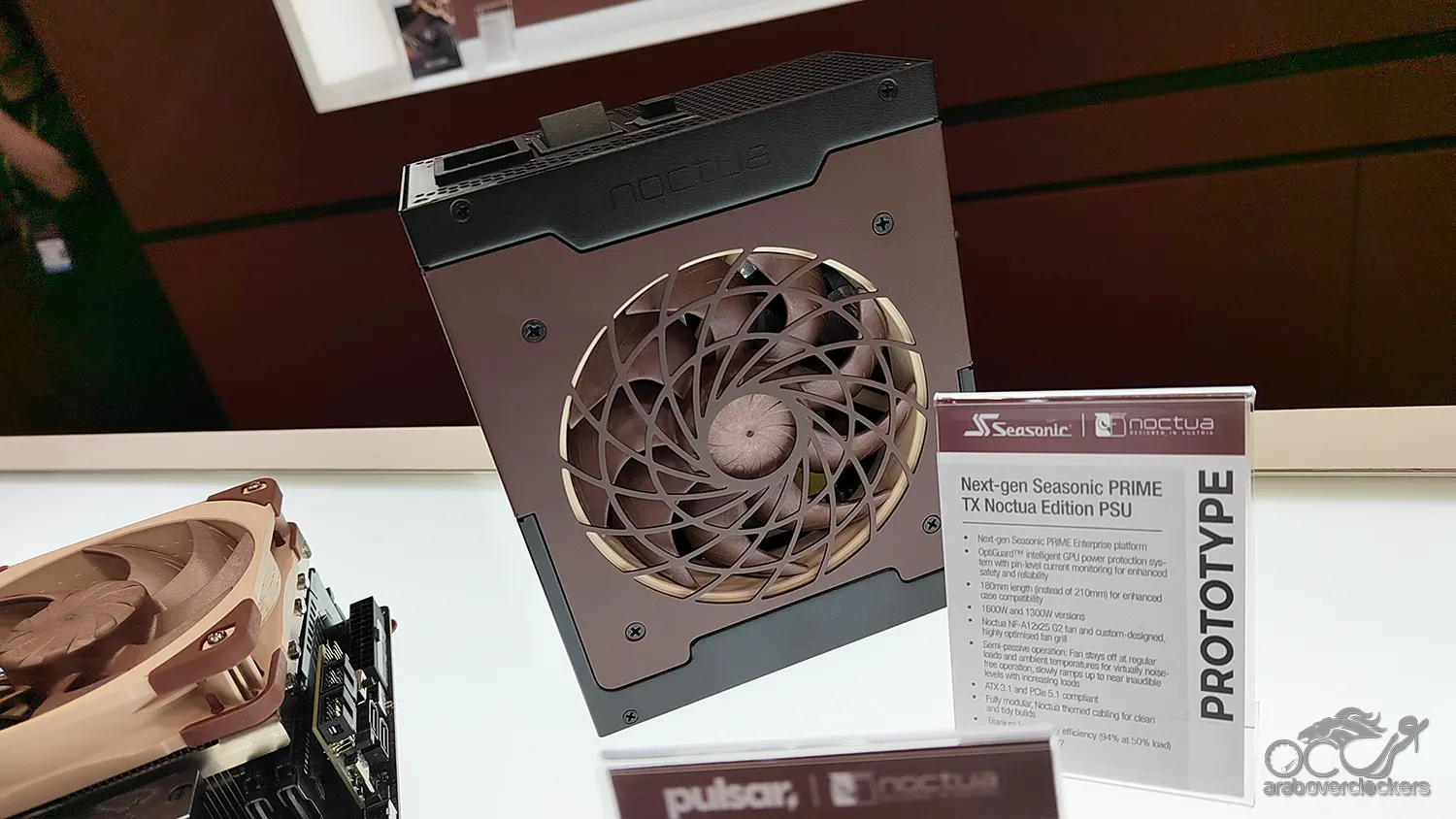
According to information provided at the booth, the collaboration extends beyond the integration of Noctua fans.
Engineers from both companies reportedly worked together on airflow optimization, component placement, and acoustic tuning to achieve exceptionally quiet operation even under demanding workloads.
Collectively, these projects demonstrate Noctua’s strategy of extending its engineering expertise into adjacent product categories without abandoning its core focus on airflow and thermal management.
New Cooling Solutions for SFF and Compact Systems
Beyond flagship cooling products and future-facing thermal technologies, Noctua also dedicated part of its booth to the rapidly growing Small Form Factor (SFF) segment.
As compact systems continue to gain popularity among enthusiasts, creators, and professionals, thermal management within limited chassis volumes has become increasingly challenging.
To address this demand, Noctua showcased a new low-profile cooler prototype designed specifically for Mini-ITX systems and other space-constrained builds.
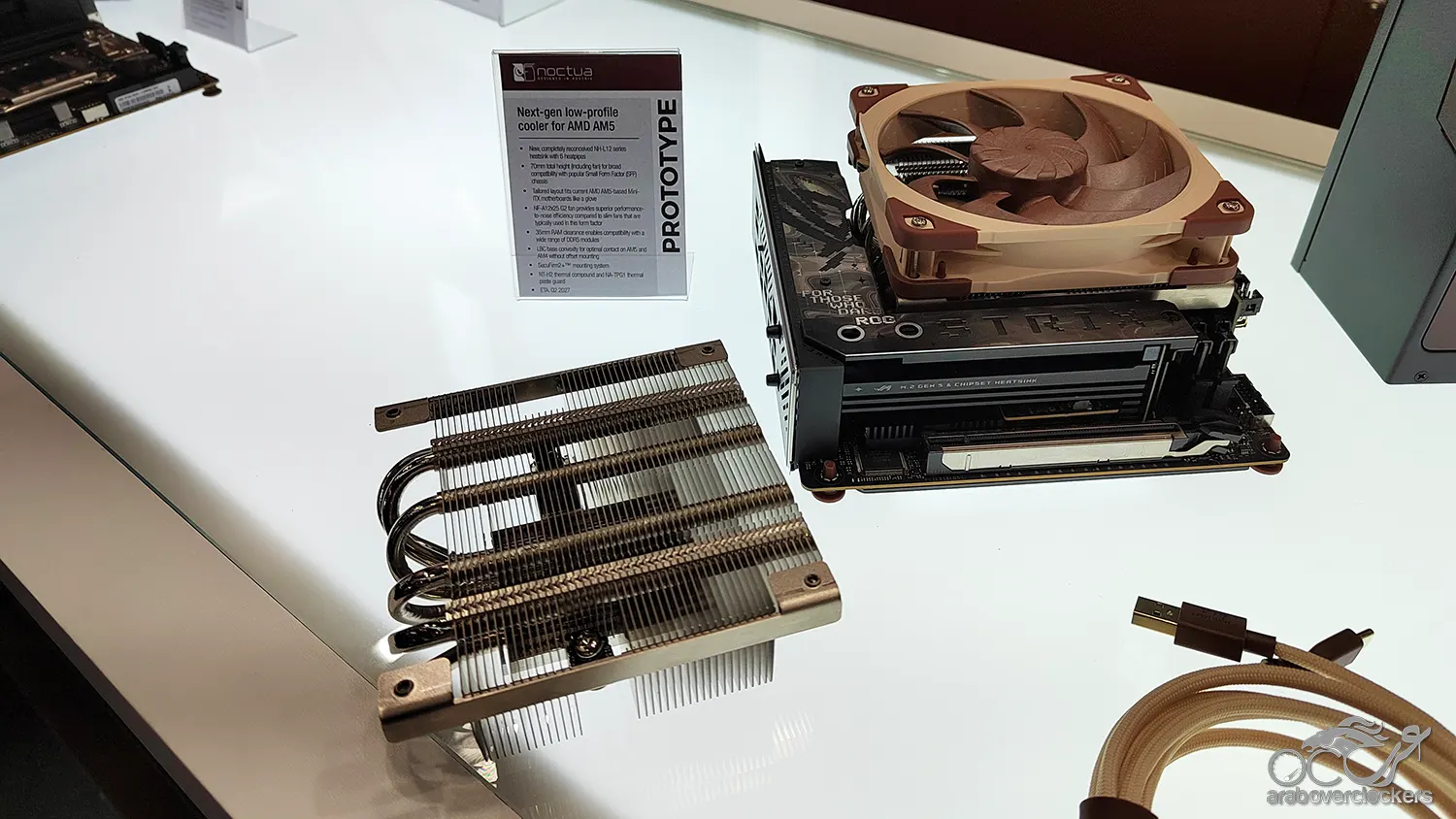
One of the most notable aspects of the design is its overall height of just 70mm while still incorporating six copper heatpipes and a layout engineered to maximize compatibility with memory modules and surrounding motherboard components.
This product reflects a broader industry trend. Users increasingly want powerful systems that occupy less desk space, but shrinking system dimensions often creates thermal compromises.
Noctua’s continued investment in the SFF market suggests the company sees compact computing as an important growth area over the coming years.
Expanding Into Industrial and Professional Applications
One of the more overlooked aspects of the booth was the company’s emphasis on industrial deployments.
For many enthusiasts, Noctua remains synonymous with premium PC cooling. However, the company increasingly views itself as a provider of thermal solutions for a much wider range of applications.
Several demonstrations highlighted how Noctua products are being deployed in professional and industrial environments where reliability often outweighs raw performance metrics.
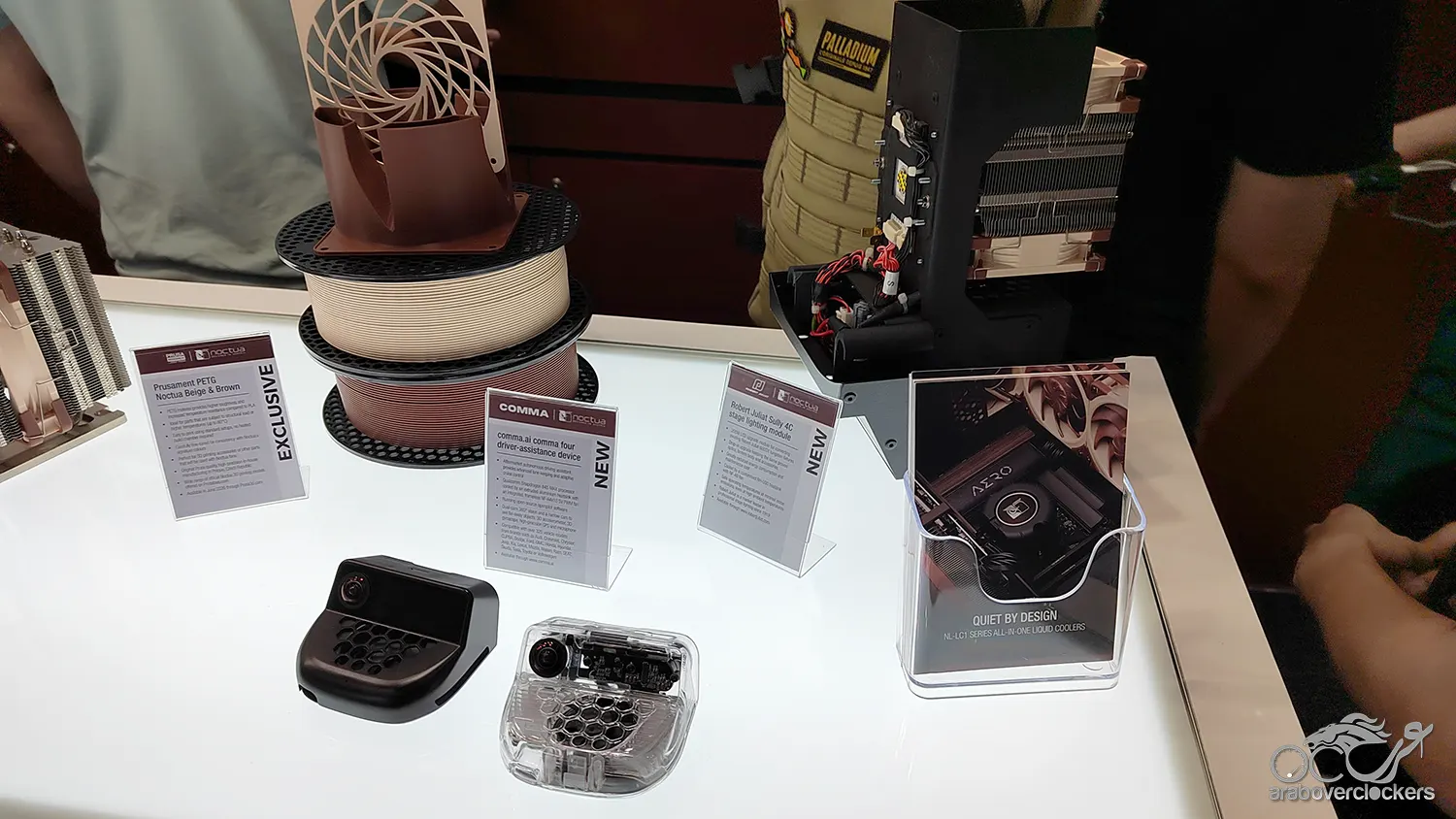
Examples included cooling solutions utilized in autonomous driving systems developed by comma.ai, as well as high-end theatrical lighting equipment manufactured by Robert Juliat.
These deployments reinforce an important point: thermal management in industrial environments frequently involves continuous operation under demanding conditions where downtime is unacceptable.
The presence of Noctua technology in such applications reflects a level of confidence in the company’s engineering standards that extends far beyond the traditional enthusiast PC market.
chromax.black Continues to Grow
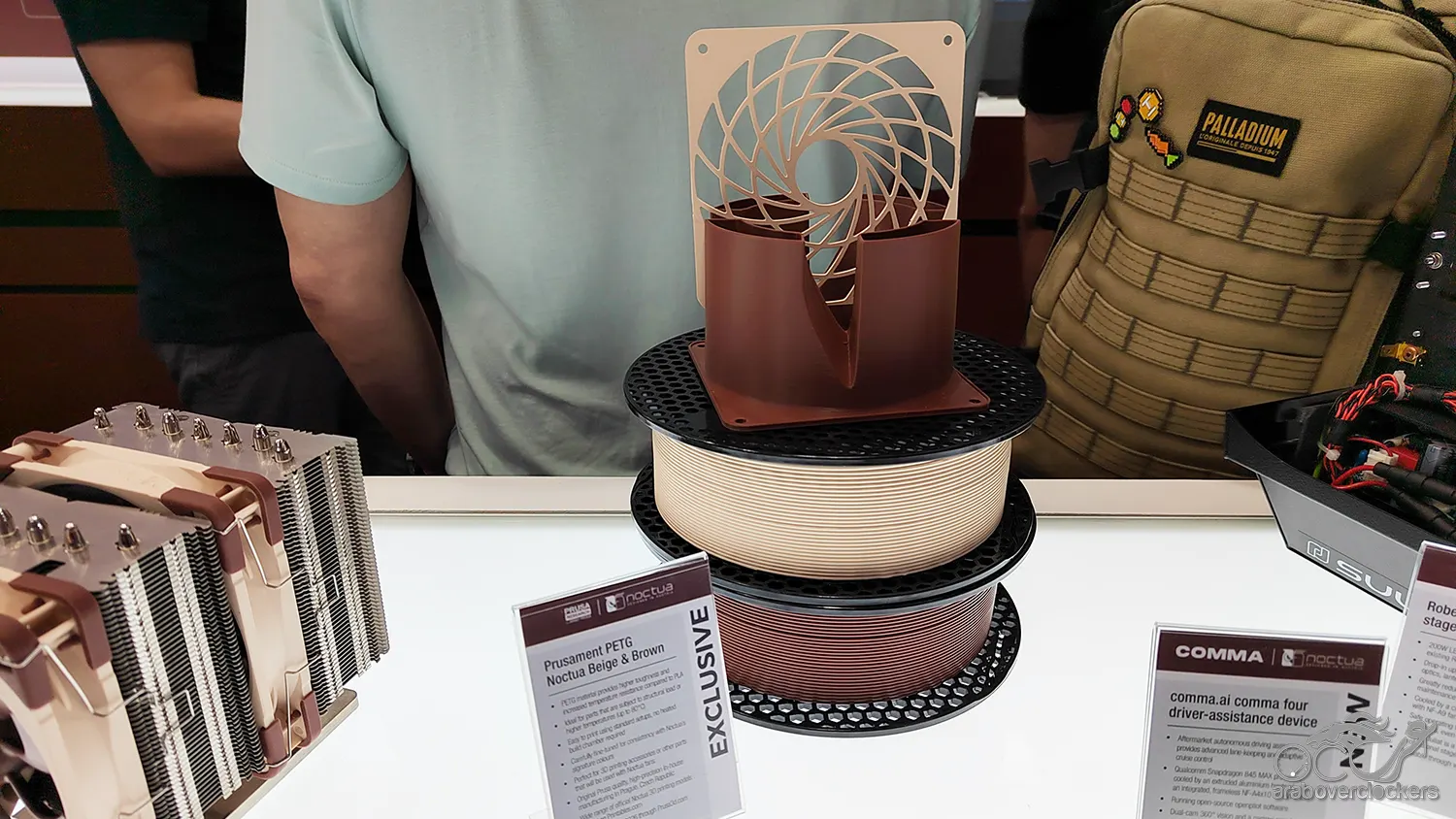
Although Noctua’s signature brown-and-beige color scheme remains one of the most recognizable identities in the cooling industry, the company continues to expand its chromax.black lineup for users seeking a more understated aesthetic.
New additions showcased at COMPUTEX 2026 included chromax.black versions of both the NF-A12x25 G2 and NF-A14x25 G2 fans, alongside new magnetic heatsink covers designed to complement all-black system builds.
While this may seem like a relatively minor announcement compared to technologies such as Thermosiphon or NT-CP1, it addresses one of the most common criticisms enthusiasts have raised over the years.
For many users, aesthetics matter almost as much as performance.
By continuing to expand chromax.black availability, Noctua is demonstrating a willingness to accommodate broader market preferences without compromising its engineering priorities.
Technical Analysis: Why These Technologies Matter
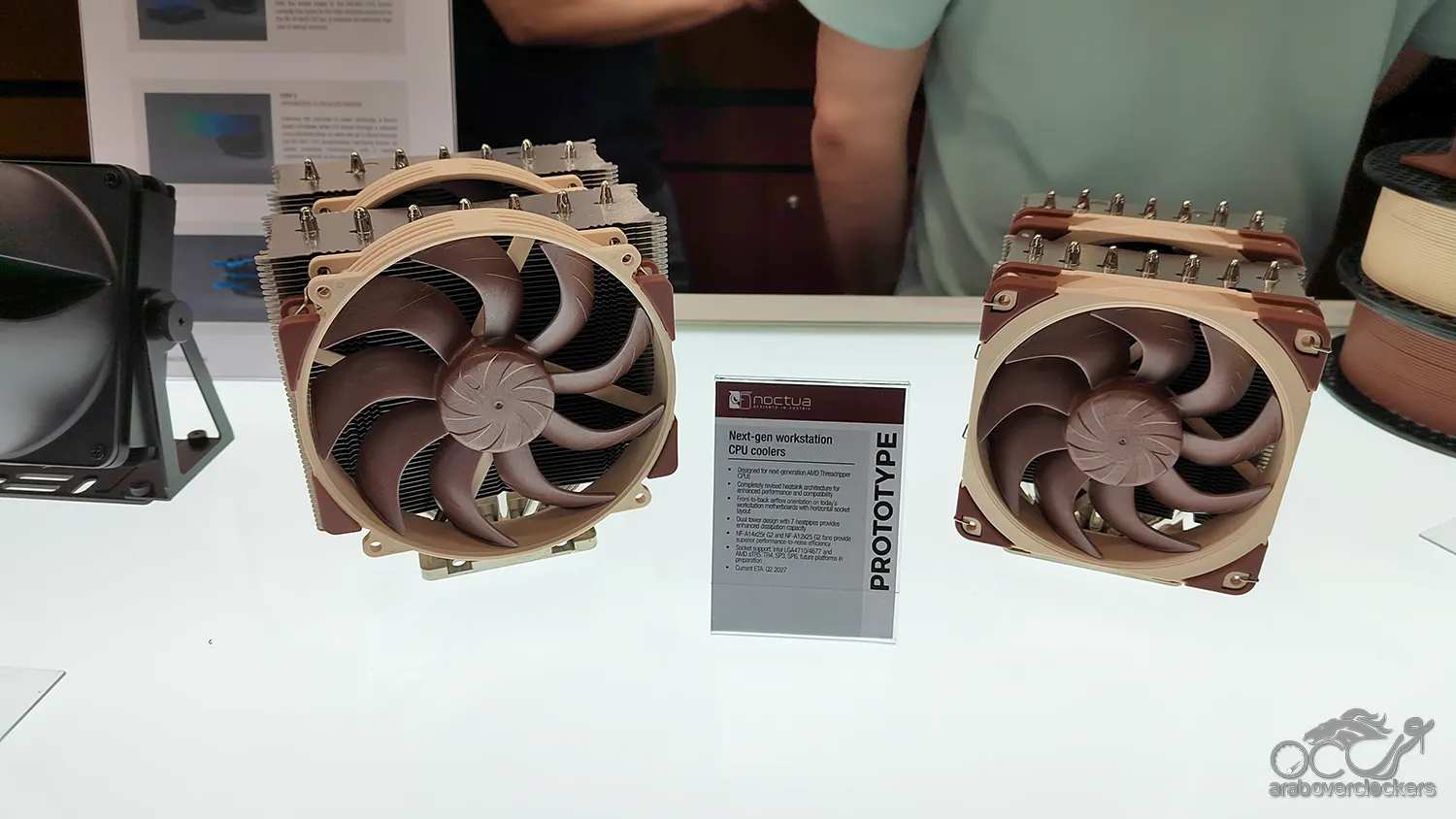
Viewed individually, the products and prototypes displayed at the booth might appear to represent unrelated projects.
Viewed collectively, however, they reveal a coherent strategy centered around a single challenge: the increasing difficulty of managing heat in modern computing systems.
A decade ago, the primary thermal challenge involved dissipating heat from the cooler into the surrounding air.
Today, the problem begins much earlier in the chain.
As manufacturing processes continue to shrink and transistor densities increase, heat becomes concentrated within increasingly smaller areas of silicon. This makes the transfer of thermal energy from the processor itself one of the most critical bottlenecks in overall cooling performance.
This is precisely why technologies such as NT-CP1 are important.
Improving thermal conductivity at the interface between the processor and cooler can reduce thermal resistance before heat ever reaches the heatsink or radiator.
Similarly, projects like Thermosiphon challenge traditional assumptions regarding how thermal energy should be transported through a cooling system.
The company’s move into liquid cooling with the NL-LC1 is equally significant.
It represents a practical acknowledgment that certain modern workloads, particularly AI processing, professional rendering, scientific computing, and extended high-power operation are beginning to push beyond the comfortable limits of traditional air cooling solutions.
Rather than resisting that reality, Noctua is adapting to it.
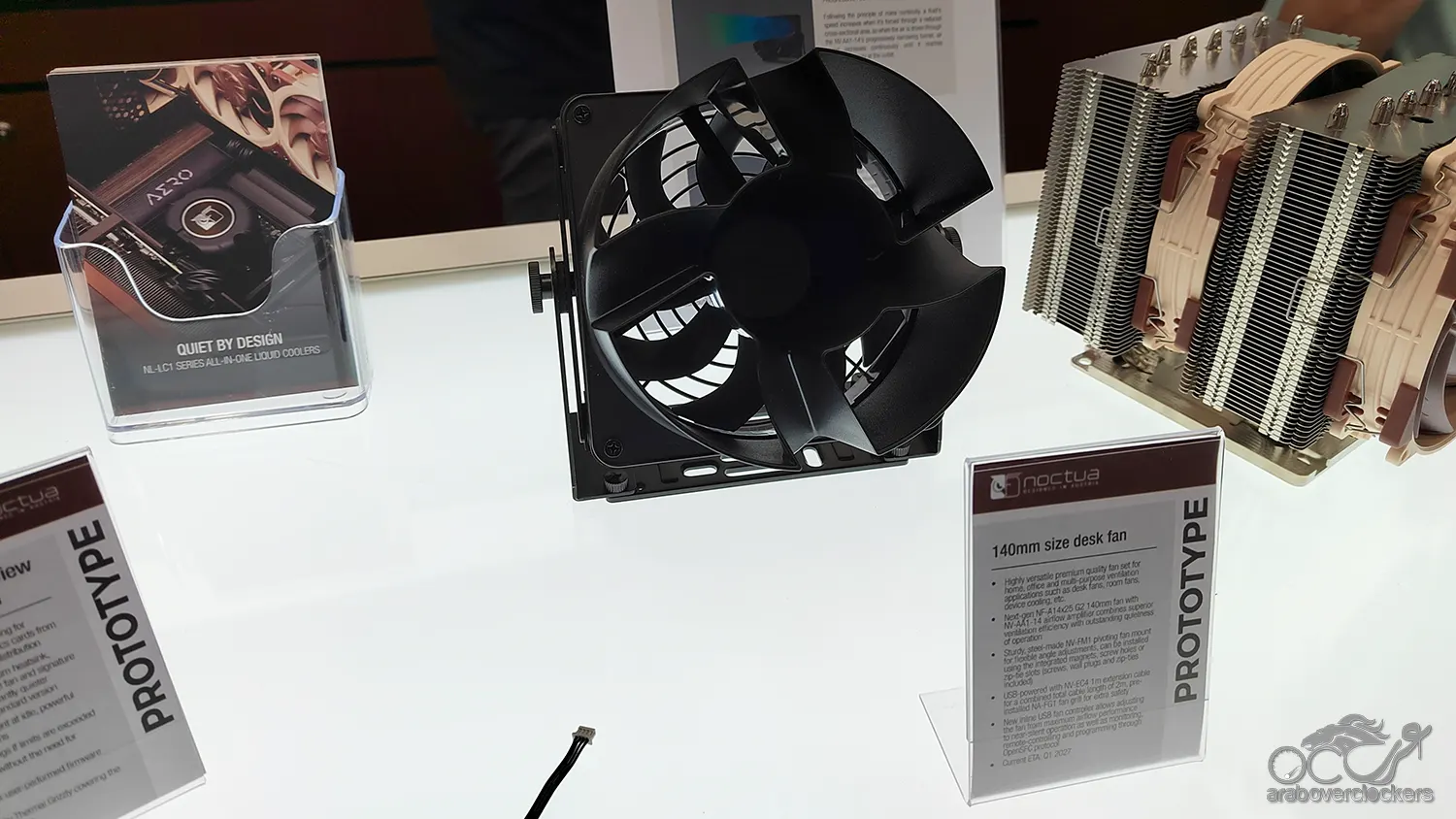
Strategic Analysis: Expanding Without Losing Identity
For years, critics have argued that Noctua moves too slowly.
Product launches often take longer than expected, roadmaps frequently shift, and new generations sometimes arrive years after competing products have entered the market.
Yet COMPUTEX 2026 suggests that the company has been using that time to build something larger than a conventional product portfolio.
Instead of aggressively entering unrelated markets, Noctua has chosen to expand into sectors that remain closely connected to its core expertise.
Liquid cooling, thermal interface materials, airflow optimization, power supply acoustics, thermal monitoring, and industrial cooling applications all revolve around the same foundational discipline: thermal engineering.
This disciplined approach gives the company a strategic coherence that many competitors lack.
Rather than chasing trends, Noctua appears focused on strengthening its influence across every layer of the thermal ecosystem.
That strategy may not generate the fastest product cycles, but it creates a stronger long-term foundation.
Competing in a Market Obsessed With Visuals
The cooling industry has changed dramatically over the past decade.
Many manufacturers now compete primarily through aesthetics, incorporating LCD displays, RGB lighting systems, customizable animations, and increasingly elaborate visual features.
Noctua continues to take a fundamentally different approach.
Its products remain focused on measurable performance, acoustic optimization, build quality, and long-term reliability.
This philosophy will likely make products such as the NL-LC1 more expensive than many competing alternatives.
However, the target audience is not necessarily looking for the lowest purchase price.
Instead, they are looking for a solution that offers the best balance of cooling efficiency, noise characteristics, reliability, and longevity.
The upcoming NT-CP1 thermal interface material may create a similarly interesting competitive dynamic.
If successful, it could position Noctua directly against traditional thermal pastes, phase-change materials, and liquid metal compounds while offering a unique combination of performance, safety, and durability.
Conclusion: What Noctua’s COMPUTEX 2026 Showcase Reveals About the Future of Cooling
After spending considerable time inside Noctua’s booth at COMPUTEX 2026, one conclusion became increasingly difficult to ignore.
The company is no longer content with being viewed solely as a manufacturer of premium fans and air coolers.
The technologies on display revealed an organization working toward a much broader vision, one that encompasses thermal interface materials, advanced cooling architectures, liquid cooling systems, industrial applications, and next-generation heat management technologies.
Some of these projects remain years away from commercial availability.
Others are approaching launch.
Yet together they communicate a clear message.
The future of cooling will not simply be defined by larger heatsinks, more powerful fans, or increasingly complex radiators.
Instead, it will be shaped by a deeper understanding of how thermal energy moves through modern computing systems and how every stage of that journey can be optimized.
The contrast between Noctua’s COMPUTEX 2025 and COMPUTEX 2026 presentations illustrates just how significant this transformation has become.
What was once a company primarily associated with premium air cooling is gradually evolving into a comprehensive thermal engineering powerhouse.
From ArabOverclockers’ perspective, the most important story at the booth was not a single product announcement.
It was the willingness to move beyond the company’s traditional comfort zone.
Entering the liquid cooling market, investing in carbon nanotube-based thermal materials, and continuing to advance ambitious projects such as Thermosiphon all demonstrate a long-term vision that extends well beyond the conventional cooling industry.
If the technologies we examined at COMPUTEX 2026 ultimately reach the market with the same level of execution demonstrated on the show floor, this exhibition may eventually be remembered as the event that marked the beginning of Noctua’s most ambitious chapter yet, one in which the company evolves from being one of the world’s leading cooling manufacturers into one of the industry’s most influential thermal engineering innovators.